
Content marketing forms the cornerstone of modern brand-building. As a B2B marketer, you create high-value, relevant experiences that nurture long-term relationships. Artificial intelligence (AI) has added another layer of complexity to the marketing landscape, though, and search behaviors have shifted as consumers rely more on AI summaries at the top of search engine results pages (SERPs). As a result, click-through rates (CTRs) have declined — and so have attention spans. You might find yourself having to justify your budget more often, or show the tangible, positive impact of your work to various stakeholders. In short, you’re facing some pretty stiff headwinds in 2026.
Still, data remains king. It doesn’t matter if you’re developing a new roadmap, refining last year’s strategy, or weighing the return on investment (ROI) of new channels like short-form video or branded podcasts — grounding your decisions in benchmarks remains non-negotiable.
To help you optimize your strategy for 2026, I’ve compiled a list of essential stats covering effectiveness, ROI, lead generation, and the nuances of the B2B and B2C markets. These figures highlight the ongoing transition from volume-based production to AI-enhanced personalization, quality over quantity, and the ongoing role of video. Use these insights to align your goals with strategies proven to drive growth, get results, generate leads, and make the folks who control your budget happy.
Top Content Marketing Statistics 2026
Looking for a quick overview? These statistics highlight the direction of content marketing in 2026, and how other top marketers are leveraging it to grow brand awareness and generate leads:
- 93% of marketers believe their budgets will stay the same or increase in 2026; 37% said their budgets are shrinking, by generally under 10%.
- In 2026, 95% of B2B marketers are using AI-powered marketing applications; 80% use AI for content creation, and 75% for media production.
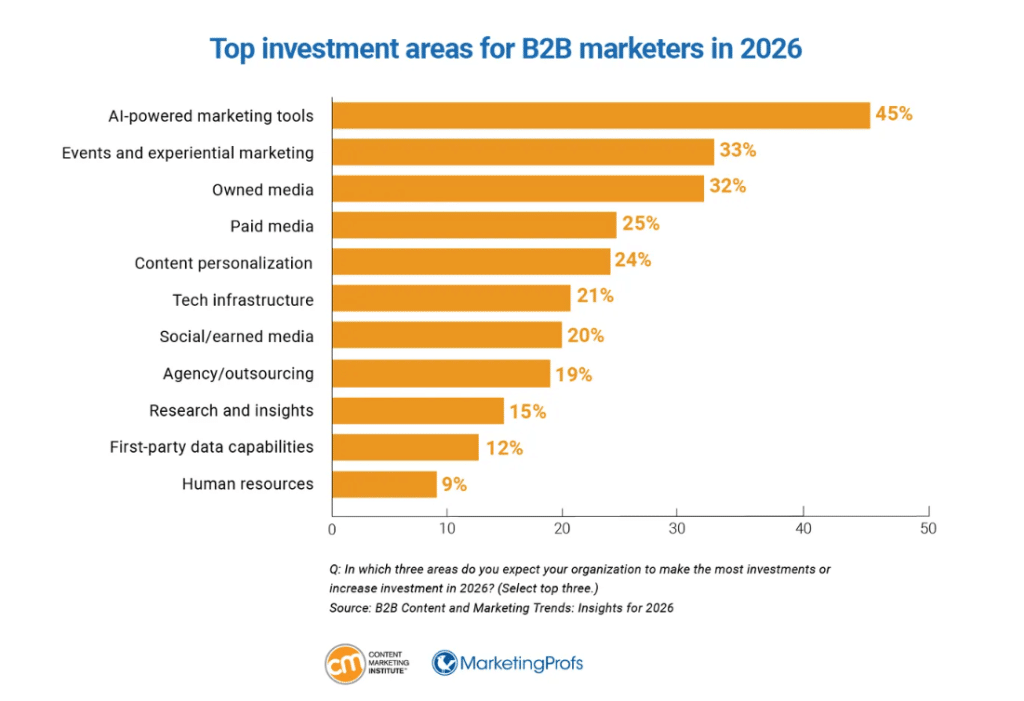
- 45% cite AI-powered tools as among the top three investments, followed by events/experiential marketing (33%) and owned media (32%).
- 97% of marketers have a content strategy for 2026, with 61% indicating it significantly or moderately improved results and ROI.
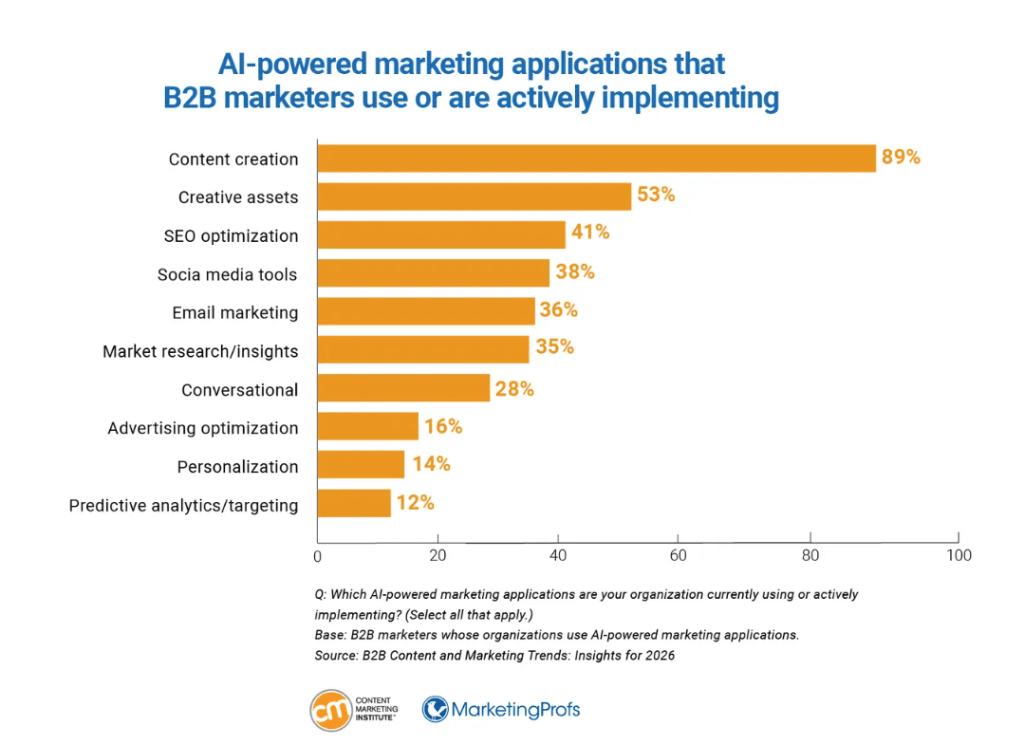
- 89% of marketers use AI-powered tools for content creation, and 53% use them to create and edit images, videos, and other visuals.
- LinkedIn is the top channel for publishing thought leadership (76%).
- Short-form video remains king, generating the highest ROI in 2025 (104%). Most marketers said it was the most effective channel and plan to continue investing heavily in it throughout 2026.
[Source: contentmarketinginstitute.com]
B2B Content Marketing Statistics
A strategic blend of high-tech efficiency and high-touch connection defines the 2026 digital landscape. As companies navigate an increasingly saturated information market and try to cut through the noise, they’ve shifted their focus from volume to measurable impact and multi-channel integration. From the dominance of AI in the creative process — and metrics collection and analysis — to the resurgence of face-to-face engagement, these statistics highlight the benchmarks and priorities shaping today’s content marketing environment.
- Content marketing is a part of 92% of B2B marketers’ marketing strategies, according to the Digital Marketing Institute.
- The most effective distribution channels in 2025 were in-person events (52%), webinars (51%), email that didn’t include newsletters (42%), social media (42%), corporate website blogs (41%), and email newsletters (37%).
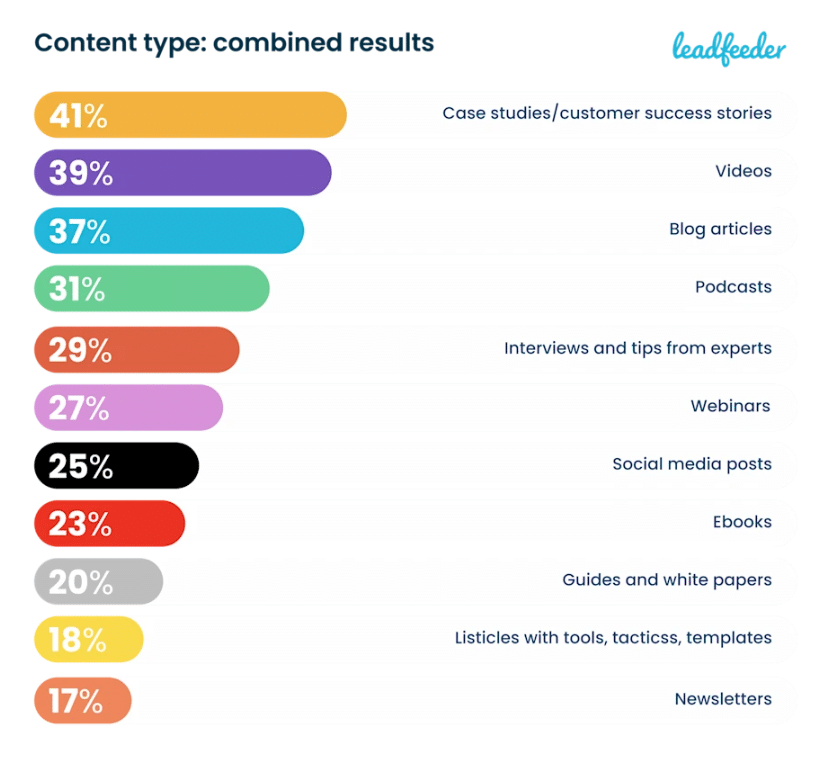
- The most popular content types, according to Leadfeeder, were case studies/customer success stories (41%), videos (39%), blogs (37%), and podcasts (31%).
- According to HubSpot, blog posts were among the top five highest-ROI content formats and among the top five content formats marketers will invest in for 2026, followed by short-form, live, and long-form video and user-generated content.
- 94% of marketers will use AI in content creation in 2026.
- Among social media platforms, the top ones marketers will use to support short-form video in 2026 are Instagram (48%), Facebook (43%), YouTube (42%), TikTok (32%), and Twitter/X (31%).
- 12% of B2B marketers say they exceeded goals, 47% felt they met most goals, and 31% reported mixed results.
[Source: LeadFeeder]
B2C Content Marketing Statistics
While B2B data often dominates industry reports, the B2C sector is seeing a demand for human-centric digital experiences. Today’s B2C success hinges on the depth of engagement and the speed of trust, so these marketers prioritize quality over quantity. The following trends showcase how B2C brands are acknowledging consumers’ prioritization of video and authenticity, and bridging the gap between automated scale and personal connection.
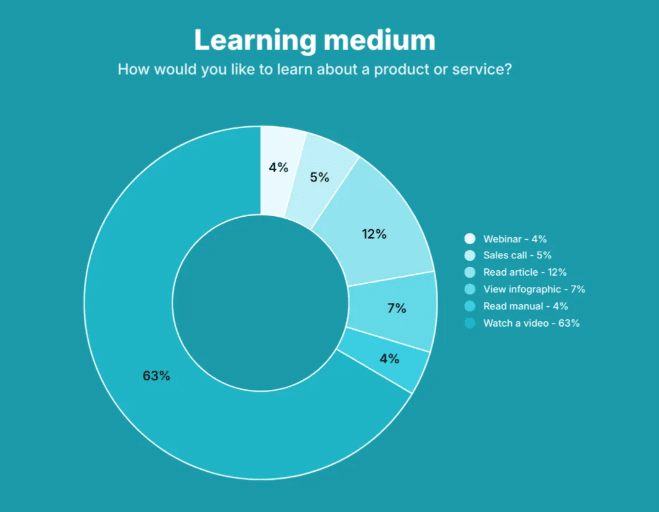
- Video content is key to attracting audiences: 96% of consumers watch an explainer video to learn about a service or product, videos convince 85% of people to make a purchase, and 84% of consumers want more videos in 2026.
- Companies embracing hyperpersonalization see 40% more value.
- 43% of marketers name engagement rate as the top metric to rate.
- 70% of B2C marketers have incorporated content marketing into their strategy, with 83% creating short articles or posts and 90% using social media to share content.
- 83% of B2C marketers agree that quality trumps quantity — even if doing so reduces posting frequency.
- B2C marketers said in-person events had the best results (48%), followed by short articles/posts (47%), videos (45%), and virtual events, webinars, and online courses (41%).
- The top three paid channels included in B2C marketers’ content strategy include social media advertising/promoted posts (88%), search engine marketing (SEM) and pay-per-click (PPC) (73%), and sponsorships (55%).
[Source: Wyzowl.com]
Content Marketing ROI Statistics
Content marketing ROI data helps you strategize where (and how) to allocate your content marketing budget to generate the biggest impact. Here’s how some of the numbers are shaking out:
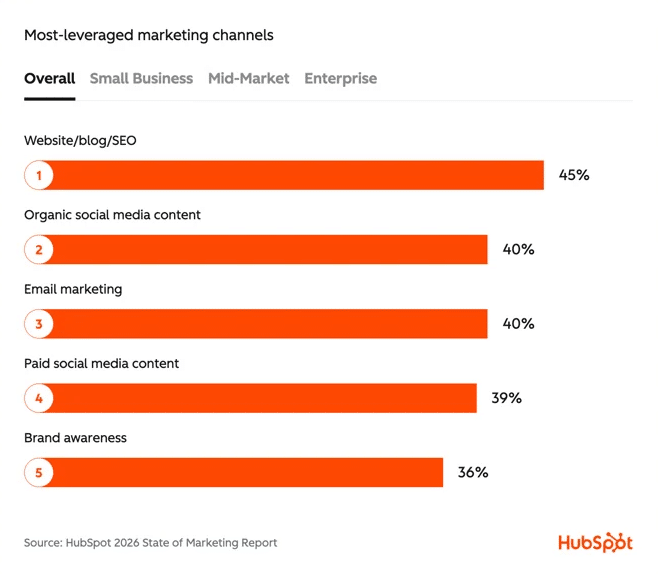
- The top marketing channels with the biggest ROI, according to HubSpot, are websites/blogs/search engine optimization (SEO) (27%), paid social media content (26%), organic social media content (24%), email marketing (22%), brand awareness (19%), and content marketing (17%).
- Email marketing generates $10 to $36 ROI for every dollar spent.
- The marketing channels driving the highest ROI are email marketing, SEO, and content marketing (blogs and video).
- 90% of marketers report a positive ROI from video content, with 95% agreeing that video is a critical component of marketing strategy, and 85% planning to maintain or increase their spend on this tool.
- 90% of marketers share videos on YouTube, 86% on Facebook, 79% on Instagram and LinkedIn, 54% on Twitter/X, and 35% on TikTok.
[Source: HubSpot.com]
AI in Content Marketing Statistics
For content marketers in 2026, AI has transitioned from a shiny new experiment to become an integral part of operations. The following information, drawn from major industry reports including HubSpot’s 2026 State of Marketing and the Content Marketing Institute, outlines the current impact and projected trajectory of AI in this industry.
- Approximately 81% to 87% of marketers use AI-powered tools for content tasks.
- 51% plan to increase their spend on AI-driven content.
- The top five uses for AI in content production include generating and optimizing copy (89%), generating and editing visual assets (53%), SEO (41%), social media management (38%), and email marketing (36%).
- Marketers estimate that human-written content costs 4.7 times as much as AI-generated content; many companies are experimenting with or adopting a hybrid AI-generated, human-edited model.
[Source: Content Marketing Institute]
Content Marketing Growth Statistics
Content marketing has a direct impact on growth metrics:
- 30% of content teams are investing in short-form video, 13% in live streaming video, and 12% in long-form video in 2026.
- 58% of marketers say content marketing generates sales and revenue.
- 72% of companies credit content marketing with boosting lead generation.
- Nearly 30% of marketers name brand awareness campaigns as a top investment for delivering the highest ROI.
- 33% of marketers measure revenue impact, followed by lead quality/conversion rates (27%), productivity metrics (20%), customer satisfaction scores (11%), and customer engagement (9%) to calculate ROI.
- According to Forbes, personalization can boost sales by 40%, with 89% of marketers agreeing that personalization is essential.
Content Marketing Lead Generation Statistics
Marketing teams know that content marketing boosts lead generation in various ways, which is why almost 90% use it.
- Compared to outbound marketing, content generates more than 3x as many leads and costs 62% less.
- According to 81% of marketers, content marketing helps elevate brand awareness. Websites with regularly updated blogs have over 430% more indexed pages than static websites without one.
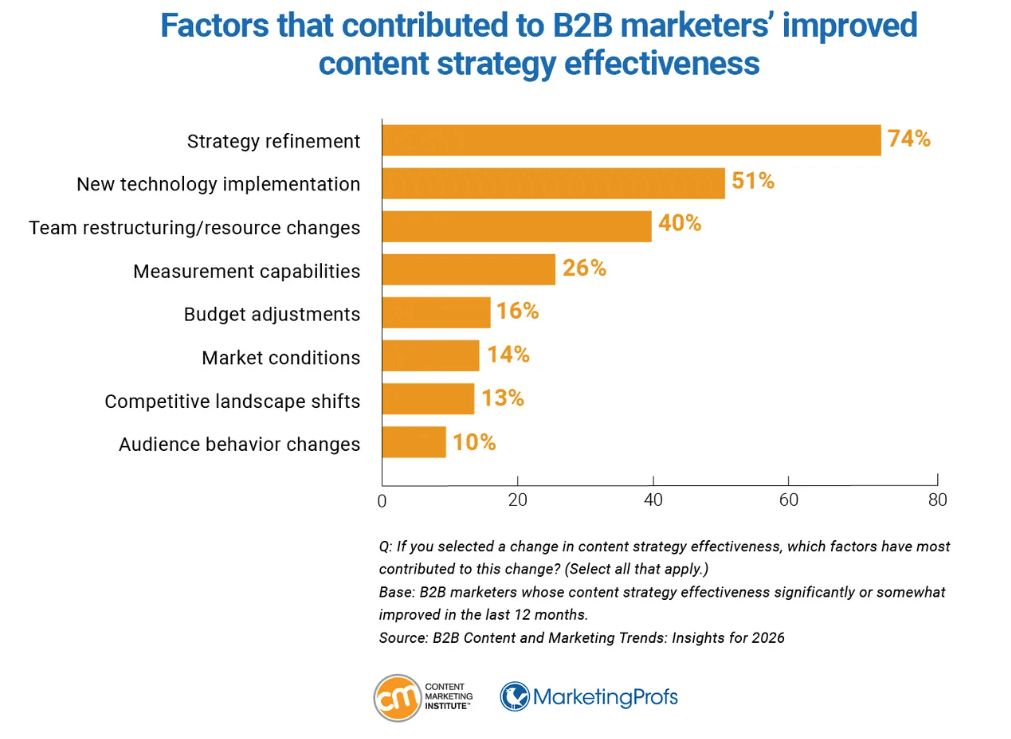
- 51% of content marketers credit new tech with improving effectiveness, but note that human involvement contributes to 74% of that improvement.
- 77% of marketers rate their leads as “high” or “very high” quality, according to HubSpot.
- While B2B marketers try to balance quality and quantity, 68% of businesses struggle with lead generation.
- 95% of B2B marketers use AI-powered apps, with 20% saying their implementations are exploratory, 48% developing, 24% established, 5% advanced, and 3% leading.
[Source: Content Marketing Institute]
Content Marketing Statistics by Channel
Successful content generation does not require being everywhere at once: It’s much more effective to be in the right place with the right purpose, with content crafted appropriately for the audience(s) you’re targeting. Each channel has a different advantage, whether it’s the long-term compounding authority of SEO-rich blogs or more immediate, high-impact engagement of short-form videos and email.
Abandon random acts of content and embrace a more deliberate roadmap. The insights below can help you audit your content mix, identify high-ROI opportunities, and align your distribution strategy with your target audience’s specific behaviors.
Organic Search
- Organic search results account for 94% of all clicks, but GenAI (and AI overviews) have led to 60% of searches ending without a click; 30% of marketers have reported decreased traffic since consumers have begun relying on and using AI tools more frequently.
- 53% of bloggers struggle to attract search engine traffic, even though blogs remain a top content channel for SEO authority and lead generation for B2B and B2C audiences.
- Even though fewer than 10% of marketers currently use voice search optimization, over 20% of the world’s 1.5 billion internet users aged 16+ use voice assistants to find information; Statista predicts that by the end of 2026, 157+ million people in the U.S. will use voice assistants.
- Just over 20% of marketers write for search engines, versus nearly 80% of marketers who prioritize writing for humans.
- Over 92% of marketers already use or plan to optimize SEO for AI-powered and traditional search engines.
Video Content Marketing Statistics
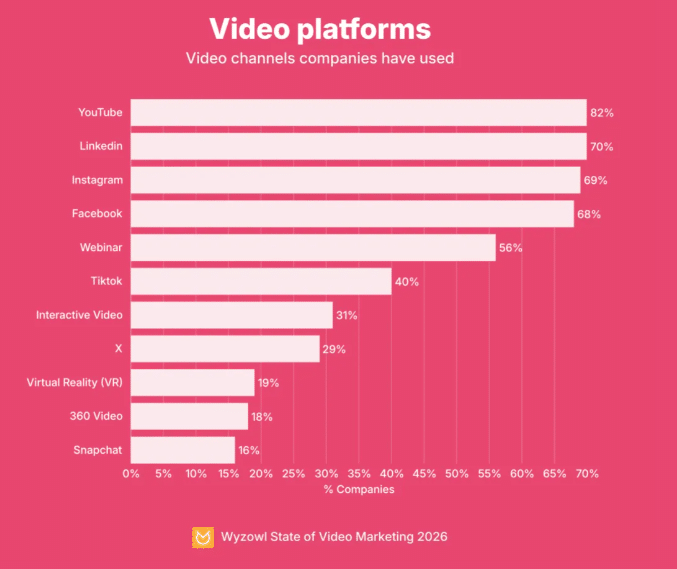
- 91% of companies use video as a marketing tool, a 3% increase from 2025.
- 45% credited video as their top-performing content in 2025.
- 82% of marketers say they’ve seen a solid ROI from video marketing, 93% credit videos with increasing brand awareness, and 82% say this content has helped increase web traffic.
- 85% of marketers credit videos with helping to generate leads and 83% say it has directly increased sales.
[Source: Wyzowl.com]
Podcasting
- In 2025, 61% of B2B marketers (41% B2C) used audio platforms like podcasts to increase the accessibility and personalization of content delivery.
- Branded podcasts can increase brand favorability by 14%, and 38% of listeners purchased products based on a podcast ad.
Email marketing
- 71% of B2B marketers use email newsletters as part of their content strategy.
- 31% of B2B marketers say newsletters are an effective lead-nurturing tactic.
- 72% of consumers prefer email marketing over other options.
- 77% of B2B marketing teams say instructive and personalized email content performs best.
- The ROI for email marketing averages $42 for every $1 spent.
- By 2027, the email marketing industry may reach nearly $18 billion.
Key Takeaways: How to Make the Most of Your Content Marketing Strategy in 2026
To stay ahead in a year defined by zero-click searches and AI-driven discovery, embrace content marketing and keep these pillars in mind:
- Optimize for the zero-visit reality: With AI overviews and generative search engines (GEO) answering queries right on the search engine results page (SERP), traditional CTRs are feeling some pressure. Structure content for extraction, using clear answer blocks at the beginning of each section to help AI models identify your content as a source of truth.
- Prioritize humans-in-the-loop: The cost of AI-generated content is almost 5x lower than that of human-written work; however, value follows the same curve. Use AI for the heavy lifting, like summarizing, drafting, and SEO tagging. Avoid AI schlock by incorporating personal anecdotes, original (fact-checked!) research, and a distinct brand voice AI simply can’t create (or imitate). Humans still need to own the vibe.
- Champion short-form video: Video remains the key for ROI, with a large percentage of marketers reporting positive returns. A caveat: 2026 favors raw and relatable over highly polished. Record a long-form session (podcast or webinar) and use AI tools to spin it into 15+ short-form clips for social media.
- Embrace owned media. As algorithms on social media platforms and search engines remain unpredictable, lean into your most stable assets — email lists and proprietary data. Double down on email marketing and interactive owned assets, like calculators, portals, or gated community groups. Consider moving your audience away from rented land (social media) and into environments where you control the data and the relationship.
- Pivot from reach to relevance: Mass messaging is so last year: Audiences favor micro-communities and appreciate hyper-personalization. Ignore vanity metrics and look at engagement depth and lead quality. Build closeness and community, which fosters the speed of trust necessary for modern conversions.
Frequently Asked Questions (FAQs)
What is the success rate of content marketing?
In 2026, the success rate of content marketing is high but increasingly stratified. The definition of success has shifted from vanity metrics to measurable business impact, with over 41% of marketing teams using sales to measure success, according to HubSpot. It generates 3x more leads than outbound marketing, and has strong conversion power when videos and email marketing are part of the toolbox.
What is the average ROI for content marketing?
ROI for content marketing is usually positive, but results vary by channel. Overall, according to SQ Magazine, the average 2025 ROI for content marketing was $7.65 for each $1 spent.
Email marketing’s ROI averages $42 per $1 spent. In 2025, for every $1,000 spent on short-form video, direct sales attributed $8,900, and AI-enhanced podcasts saw a 650% increase in ROI.
What is the average budget for content marketing?
The U.S. Small Business Administration suggests that businesses with under $5 million in revenue should allot 7-8% of gross revenue to marketing. Mid-sized businesses should invest 6-9% of revenue, and startups or high-growth businesses should invest 20-50% of revenue. In a very competitive industry, you may want to allocate 10-15% or more.
Once you have your dollar amount, Almcorp’s recommended budget breakdown for 2026 is:
- Content marketing SEO/AEO: 25-30%.
- Email marketing: 15-20%.
- Paid search (PPC): 10-15%.
- Paid social media: 10-15%.
- Video marketing: 10-12%.
- Marketing tech and AI tools: 8-10%.
- Influencer and partnership marketing: 5-8%.
- Testing and innovation: 5%.


