
In 2026, video isn’t merely a secondary channel for online visibility: It’s become the primary lens through which we consume the digital world. Navigating this evolution requires embracing a data-backed, multi-format strategy. This guide breaks down the eight trends worth mastering to position your brand ahead of the competition.
What’s changed in our 2026 update:
All new trends, with detailed explanations for each:
- The Evolution of Short-Form Video
- The Rise of Shoppable and Interactive Video
- Personalization Scales Up
- Data-Driven Strategy and Analytics
- Accessibility as a Performance Driver
- Engagement as the Ultimate Conversion Multiplier
- AI as the New Production Baseline
- The Humanized Brand
- New and updated information in all FAQs.
What’s Trending in Video Marketing
With 91% of businesses using video as a core marketing tool, impressions are being deprioritized in favor of retention. Fueling this shift is a huge consumer appetite: 96% of people report watching explainer videos to learn about products, and 85% have purchased after watching a brand’s video content. As the average user spends about 17 hours weekly streaming online video (including an average of 52 minutes watching TikTok daily), marketing teams face a monumental challenge: cutting through the noise to deliver personalized content that delivers.
Trend 1: The Evolution of Short-Form Video
Short-form video has become a major format for consumers to research and interact with brands. Over 95% of customers say they’ve watched an explainer video to learn something. Another 80% downloaded or bought an app after watching a demo video. 84% want brands to use more videos in 2026.
The sweet spot for length is shifting, too. While 15-second clips still drive quick engagement, platforms like TikTok, Reels, and YouTube Shorts are increasingly prioritizing longer short-form content (45-60 seconds). This added time gives you breathing room to expand into storytelling and product education. And the two-second rule? Your hook is a KPI. If you don’t stop the scroll within the first two seconds using movement, a bold statement, or a visual pattern interrupt, the rest of the video doesn’t matter.
If you’re still on the fence, consider this opinion from one Reddit user:
“Short form isn’t dead, but it’s misunderstood. It’s distribution, not an asset. That’s why it feels volatile. One week the algorithm loves you, the next week you’re invisible. Long-form, on the other hand, compounds. It ranks, builds authority, and quietly brings in intent-driven traffic months later.
“The mistake is expecting short form to deliver long-form ROI. Right now, short form works best as top-of-funnel attention and brand depth, not consistent revenue. If your blogs are still driving steady traffic, that’s your signal: owned content builds equity, rented platforms spike reach. The smartest play in 2026 isn’t choosing one, it’s using short form to amplify long-form, not replace it.”
| Format | Length | Goal | Key Element |
| The Micro-fix | 30-45s | Education | One specific problem + one clear solution |
| Myth vs. Reality | 15-30s | Pattern interrupt | Challenge a common industry belief instantly |
| The POV Story | 45-60s | Connection | Use relatable POV text to hook emotions |
| Before/After | 15-45s | Visual proof | Fast transformation with high-satisfaction payoff |
Trend 2: The Rise of Shoppable and Interactive Video
Does the traditional marketing funnel — where a customer sees an ad, searches for a site, and manually navigates to a checkout page — still exist? Sure, but video is coming on strong as a direct-action channel, where the distance between “I want that” and “I bought that” is one tap. By integrating in-video product links, interactive hotspots, and instant checkout buttons, brands can remove the friction that often halts conversions. This one-screen journey allows users to explore pricing, respond to surveys, or complete a purchase without ever leaving the player.
According to Rich McMahon, CEO and founder at cda Ventures, “With 71% of consumers saying they’d shop more frequently using AR and virtual try-ons reducing return rates by up to 40%, the future of retail seems to be immersive and interactive. Seamlessly integrating shopping features into social content, leveraging user-generated photos, and creating engaging shoppable videos are a must.”
| Feature | Impact | Best Use Case |
| Integrated Checkout | Increases conversion rates up to 70% | Fast-moving consumer goods (fashion, beauty) |
| Interactive Polls/Quizzes | Increases watch time by up to 591% | Qualifying leads or gathering product feedback |
| Dynamic Hotspots | Syncs with real-time inventory and pricing | Complicated products with multiple variants or specs |
| Live Advisor/1-on-1 | Builds high-level trust through real-time video | High-ticket B2B sales or personalized luxury retail |
Trend 3: Personalization Scales Up
That {First_Name} tag is so last year! Welcome to the era of dynamic creative optimization (DCO), where AI becomes your co-director, assembling custom video variations for each viewer based on their industry, location, and stage in the buying journey. The goal isn’t to make a single perfect video for everyone, but to create a flexible video system you can slice into thousands of hyper-relevant permutations.
Brands are using AI avatars (digital twins) to deliver 1-on-1 personalized messages at scale. A CEO can now “personally” welcome 5,000 different users by name and mention their specific company goals — all generated from a single two-minute recording. Since algorithms prioritize relevance over basic age/gender stats, when your video matches the specific vibe and terminology of a niche community (e.g., marathon runners vs. powerlifters), the AI will find that audience.
Pro tip: While AI gives you speed, use taste as your competitive advantage. Before publishing, ask: “Does this look like a characterless stock template, or does it feel like our brand?” Using AI is fine — but do so to deliver the most human sense of quality.
Trend 4: Data-Driven Strategy and Analytics
Creating a video on a hunch doesn’t justify the marketing spend. The most successful teams are focusing less on likes and views and more on retention intelligence. After all, if you treat your audience retention graphs like a scientific blueprint, it’s easier to find the exact second a viewer loses interest. Then you can take that data to re-engineer future content. Study those graphs: If you see a steep cliff at the 10-second mark, your hook is a mismatch for your content. If you see a dip at the transition, your pacing is too slow.
Every 15-20 seconds, change the visual. A new camera angle, text overlay, or B-roll cut resets the viewer’s brain and keeps them engaged. Since watching on mute is the default for mobile users, always use captions. If they can’t read your data, they won’t stay.
Per one Redditor, “Most marketing teams use analytics way less strategically than they claim, but the ones who actually leverage data properly see massive advantages in campaign performance and ROI. For messaging decisions, analytics helps identify which pain points or benefits resonate most with different audience segments. Teams analyze which email subject lines, ad copy variations, and landing page headlines drive the highest engagement and conversion rates for specific customer types. The biggest gap is between having data and knowing how to act on it. Most marketing teams drown in metrics but struggle to translate insights into concrete campaign optimizations. The valuable skill is connecting data patterns to specific tactical changes rather than just creating pretty dashboards.”
Pro tip: Don’t just track if they watched — track where they went next. The best data-driven strategy connects video watch time to pipeline velocity (how quickly viewers move from a video to a lead form).
Trend 5: Accessibility as a Performance Driver
“Accessibility is the foundation of an effective digital presence,” said Christina Adams, who leads digital accessibility programs at Siteimprove. “It’s literally how we enable websites to be understood by other technologies and experienced by everyone. It isn’t only about patching defects, it is building a strategy for maximum reach.”
With the full implementation of the European Accessibility Act (EAA) and updated ADA Title II standards, accessible video content is a legal requirement — and a business opportunity. Accessible videos reach 15-20% more viewers. By designing for inclusion, you help audiences with disabilities and capture the silent scrollers who consume content in offices, on transit, or in quiet zones. (85% of people watch videos with the sound off.)
While closed captions (CC) are great, open (burned-in) captions ensure that the instant someone scrolls past, they can read your hook, regardless of their device settings. Host a full transcript on your landing page to serve as a study guide for users (and a goldmine of keywords for SEO strategy). If flickering graphics and overlapping audio make your video too busy, you lose viewers. Use clean layouts and white space.
Pro tip: Accessibility is Universal Design. The same feature that helps a hearing-impaired user also helps a commuter at a train station or a student at the library. When you solve for one, you extend the value to everyone.
Trend 6: Engagement as the Ultimate Conversion Multiplier
Since the goal of video has evolved from passive viewing to active participation, make engagement the engine of your sales funnel. By integrating interactive elements, you transform a one-way broadcast into a two-way conversation, effectively turning viewers into decision-makers. According to a Wyzowl survey of video marketers, 82% say video has helped increase traffic, 85% said it helps generate leads, and 83% said it directly increased sales.
Use in-video quizzes and polls to qualify your leads in real-time. Clickable hotspots invite readers to learn more about specific features. Choose-your-own-path demos, popularized by B2B SaaS, let users skip to the parts of a video most relevant to them, which increases completion rates.
As one Redditor said, “Engagement metrics matter for brand building and awareness, but they’re vanity metrics if they don’t eventually turn into revenue. Track engagement as a leading indicator of whether your content resonates, but don’t mistake it for business results. Use it to optimize what you post, then measure what actually matters, like leads, sales, and ROI.”
Pro tip: Don’t overcomplicate. Start with one interactive touchpoint (like a poll at the end of a video). Track the interaction, not just views. Look for data on whether viewers clicked the link or answered a poll.
Trend 7: AI as the New Production Baseline
In 2026, AI has become deeply woven into most companies’ workflows. It’s shifted from novelty to structural necessity, with over 75% of marketing videos now created with its help. Yes, you can generate video from a prompt, but that strategy won’t necessarily result in a great end product. AI shines when it’s used to do the “boring” stuff — the scripting, b-roll sourcing, and localization — so humans can focus on the story’s heart.
Audiences have developed a sixth sense for generic, soulless videos. The winning approach is human-led, AI-fed. One master video can become 50 variations tailored to different regions or behaviors, increasing conversion rates in the retail and B2B sectors. But, before you publish an AI-assisted video, run this checklist:
- Does it have a point of view? AI is great at average, but videos need a unique stance to avoid sounding templatized.
- Is there evidence? Replace AI-generated fluff (or complete inaccuracies) with real-world proof, data, or customer testimonials.
- Does it match the brand voice? Don’t allow AI to smooth out the personality that makes your brand recognizable.
- Is the glitch factor gone? Check for AI artifacts (glitching eyes, weird body movements) that can erode viewer trust.
According to a Content Marketing Institute survey, “56% of marketers rank AI-powered automation as high or medium priority, while only 21% see it as low priority.”
But here’s the caveat: the winners aren’t those who generate the most content, but those using AI to deliver a human sense of quality at scale. HeyGen is great for generating AI avatars, and Sora is a leading text-to-video platform offering high-fidelity, cinematic B-roll, and photorealistic content.
Trend 8: The Humanized Brand
The era of the faceless corporate logo is over. B2B and B2C audiences reward videos that feel like they were made by a person, for a person. With trust in traditional advertising waning, brands are allocating more of their budgets toward user-generated content (UGC) and employee-generated content (EGC). The data supports this shift: campaigns incorporating UGC see a 50% jump in engagement, and creator-led ads drive 70% higher click-through rates than brand-produced spots.
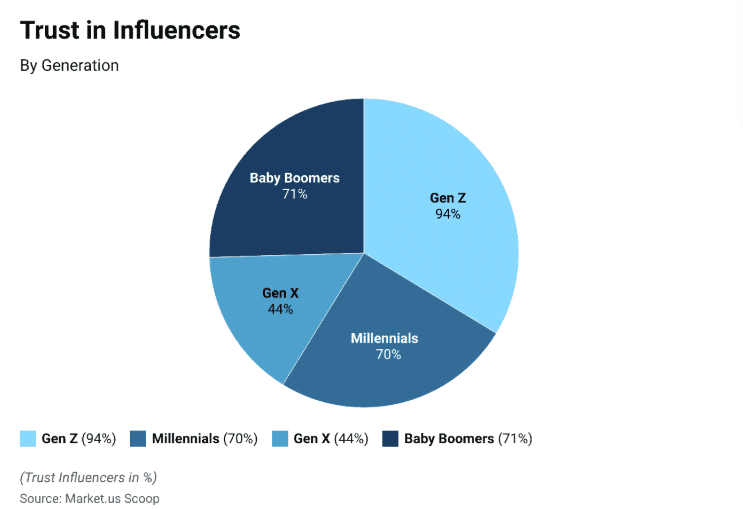
People are your best performance asset. According to Scoop, 94% of Gen Z trust influencers. A story shared by a real employee or customer registers as a recommendation; a brand ad registers as an interruption. Personalized content on platforms like TikTok and LinkedIn gets 3.6x more engagement than non-personalized posts. Your bottom line benefits, too, since EGC doesn’t require a $10,000 session — just a subject matter expert with a smartphone and a clear point of view.
(Source: Scoop Market US)
This year, try these strategies to build a sustainable content pipeline:
- Encourage employees to record 60-second reflections on their work once a month. Provide basic lighting tips (face a window!), but keep the scripts to a minimum to preserve authenticity.
- Move your best customer UGC to your paid ad spend. These performance ads typically cost half as much as traditional creative while delivering a much higher CTR.
- Avoid the temptation to over-edit or polish away personality. iPhone footage, organic pacing, and conversational tone are today’s aesthetic.
Amy Jo Martin, founder and CEO of Renegade, said, “I’m obsessively studying emotion out in the wild. [Look at the Dodgers]. When you watch as a fan, there’s a sense of belonging because you can see the genuine connection [the players] have with each other. You cannot fake that. Do they scale with technology? Of course they do. They let the stories breathe. Have they been studying the Savannah Bananas and the theater that happens out there on the mound or running the bases? Absolutely. I bet MLB has been because that’s what’s creating the entertainment and the human connection that converts”
Pro tip: Your people are your most credible storytellers. Inviting a product manager to walk through a new feature on camera builds trust infrastructure.
Key Takeaways
Adapting to the fluid, fast-moving video landscape requires shifting from high-volume posting to high-value interaction. By integrating AI for production efficiency, prioritizing accessibility with captions, and encouraging employees to share their voices for authenticity, you can transform passive viewers into an active community. Ultimately, success lies in shortening the distance between discovery and action — think shoppable links and interactive demos — so your content drives measurable growth across every platform.
Frequently Asked Questions (FAQs)
What is video marketing?
Video marketing is the strategic use of video content, like quick social clips or in-depth interactive demos, to attract, educate, and convert your target audience. Videos bridge the gap between brand discovery and instant purchase through shoppable links and AI-driven personalization.
What are the types of video marketing?
You can categorize video marketing by the specific role it plays in the customer journey: awareness, education, and action. While traditional categories remain, the focus has pivoted from talking at an audience to interacting with them.
- Awareness (the hook): Designed to capture attention in an overcrowded feed, these videos include short-form (often viral) clips, POV stories, and high-energy brand teasers. The most effective awareness videos often feature UGC or employee ambassadors.
- Education (the value): These videos get more granular than the typical how-to and become interactive explainers, myth vs. reality sessions, and specialized webinars. Their goal is solving a specific problem or teaching a new skill while positioning your brand as a trusted authority.
- Action & engagement (the conversion): Shoppable and interactive tech have revolutionized this category.
What are the key metrics to track in video marketing?
Vanity metrics (raw view counts) are out. Retention intelligence and conversion depth are in. To truly understand your ROI, prioritize the following KPIs:
- Average view duration (AVD) and watch time reveal the quality of your content. Tracking exactly where viewers drop off helps you refine your pacing and hooks. A high completion rate tells platforms your content is satisfying, which will trigger wider organic distribution.
- Click-through rate (CTR) is essential for campaigns with a specific CTA. The CTR measures the percentage of viewers moving from watching to doing, indicating how compelling your offer and its placement are.
- Conversion rate is your bottom-line metric. It tracks viewers who complete a high-value action (e.g., product purchase, demo signup, or lead form fill) directly after interacting with the video.
- Engagement rate (interactions) tells you the volume of shares and comments, which act as social endorsements and expand your reach to new niche audiences.
- Bounce rate, which tracks user behavior after they click a video link, tells you whether your landing page content aligns with the video’s promise, and prevents wasted ad spend.
Pro tip: Don’t just track if someone watched — track the moments they rewatched. Spikes in your retention graph often highlight your most persuasive “aha!” moments, which you can recycle into short-form clips.
Which social media platforms are best for video marketing in 2026?
You can’t define the best platform based on the number of views you get anymore, but on where you can drive the most meaningful action. Where you post depends on your marketing goals.
- For discovery and viral growth — TikTok, Instagram Reels, YouTube Shorts: These platforms remain the leaders of short-form, vertical video. TikTok continues dominating Gen Z engagement and viral, influencer-driven trends. Instagram Reels has become the gold standard for visual commerce and lifestyle brands. YouTube Shorts can funnel viewers toward a brand’s long-form library.
- For authority and SEO — YouTube: YouTube remains the world’s second-largest search engine and home for high-intent buyers. It’s perfect for long-form education, in-depth tutorials, and how-to content that builds deep brand authority. Since its integration with AI search, your video chapters and transcripts are more indexable (and discoverable) than ever.
- For B2B and executive influence — LinkedIn: LinkedIn has solidified its position as a platform for professional targeting. It’s the essential platform for thought leadership, where B2B brands use employee-led videos and behind-the-scenes executive updates to build trust directly with decision-makers.
- For community and retargeting — Facebook: Facebook functions as a middle-of-the-funnel engine. It turns the interest generated on other platforms into a loyal relationship. Facebook Groups enable brands to build high-trust communities. Its Ads Manager is a sophisticated retargeting tool that lets you serve video ads to users who’ve already engaged with your brand elsewhere.


