
- Trend 1: The Continued Rise of Experiential Travel and Personalization
- Trend 2: The Dominance of Mobile and Seamless Digital Experiences in Travel
- Trend 3: Leveraging Influencer Marketing and User-Generated Content in Travel
- Trend 4: The Importance of Data and Analytics for Travel Marketing Insights
- Trend 5: The Evolving Role of Social Media and Emerging Platforms in Travel
- Key Takeaways
- Frequently Asked Questions (FAQs)
Travel behavior continues to shift as technology, costs, and expectations evolve. From immersive experiences to AI-powered personalization, the travel landscape in 2026 demands more precise targeting, faster testing, and tighter alignment between campaigns and trip-planning behavior.
Here are five key trends shaping travel marketing in 2026, to help your brand stay competitive and connected to today’s travelers.
Trend 1: The Continued Rise of Experiential Travel and Personalization
Travelers in 2026 are not just booking trips, they’re building experiences around identity, interests, and values. Many travelers now view wellness retreats, literary-themed getaways, and cultural stays as investments in personal growth rather than escapes. More thoughtful travel is pushing travel marketers to move past generic packages toward curated, interest-based experiences.
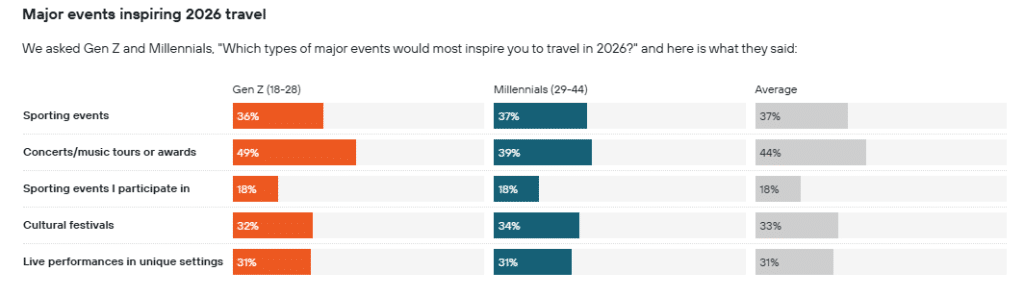
You can see the shift toward alternative accommodations and slower travel. Farm stays, cabins, and other rural rentals appeal to travelers who want to unplug and reconnect with nature. Major cultural and sporting events are also driving demand for marquee trips centered around a single experience, with travelers willing to pay for upgraded accommodations, premium seating, and tailored add-ons.
Source: Kayak
The real opportunity is to match people with personalized trips instead of interchangeable itineraries. Segment audiences by interests, intent, and values, then use first-party data to highlight the best combination of stays, activities, and experiences for each group in your ads and landing pages. You will see more conversions and repeat bookings when your creative reflects what travelers care about.
Key stats to know:
- 91% of travelers say they seek getaways focused on reading, relaxation, and quality time with loved ones.
- 84% of travelers are interested in staying on or near a working farm at least once, and 57% of travelers say they are likely to attend a uniquely regional sporting experience while on a trip, per the same report.
- About one in four travelers describe their ideal getaway as a mix of soft adventure and relaxation, and another 23% say they are adventure- and nature-seekers.
Trend 2: The Dominance of Mobile and Seamless Digital Experiences in Travel
Mobile is the default channel for most trip planning and booking in 2026. Many travelers now research options, compare prices, and complete bookings on their mobile devices. They expect fast, intuitive experiences that make it easy to move from inspiration to purchase in just a few taps. If it takes longer or the page lags, travelers are often likely to abandon the booking. Slow load times, clunky forms, required account creation, or missing payment options can cause a drop-off almost instantly.
Mobile-first is now a practical requirement for travel marketers. It calls for landing pages optimized for small screens — clear calls to action, low-friction forms, and cross-device continuity. Analytics should focus on where mobile users abandon the process so you can quickly address friction points.
Key stats to know:
- 74% of travelers book flights through airline websites or apps.
- 54% of lodging bookings are made directly through brand sites or apps, rather than third-party channels, per the same report.
- 80% of Millennials and Gen Z respondents preferred using travel planning apps or social media to plan trips, and 66% typically download the travel apps they need before departure.
Trend 3: Leveraging Influencer Marketing and User-Generated Content in Travel
Influencer partnerships and user-generated content have become core tools in travel marketing. Travelers rely heavily on real people to show what a destination or experience feels like. Short-form videos, creator-hosted itineraries, and guest photos often outperform traditional brand ads, especially among younger audiences who are skeptical of polished campaigns.
Expectations for authenticity are high: Travelers prefer creators who share authentic, realistic travel content, including budget information and honest reviews. In response, brands are building longer-term partnerships with niche creators who speak directly to specific segments and structuring campaigns so that creator content feeds into ad units, landing pages, and email flows.
Marketers are also paying closer attention to the emotional impact of travel content. Constant comparison with polished social feeds can leave travelers feeling pressured and dissatisfied with their own trips. In response, marketers are moving toward more transparent messaging, clearer sponsored content labels, and stories that reflect a wider range of budgets, life stages, and travel styles.
Think beyond one-off influencer posts: Build ongoing partnerships with creators whose audiences match your key segments. Set guidelines for creators that encourage transparency and authenticity rather than unrealistic highlight reels. Also, add simple prompts for guests to share photos and reviews you can reuse.
Key stats to know:
- 81% of Gen Z respondents use social media every day.
- More than half of Gen Z report spending at least 3 hours per day on social platforms, according to the same survey.
- Among Gen Z travelers, 59% look to Instagram, 54% to YouTube, and 47% to TikTok for trip inspiration.
Trend 4: The Importance of Data and Analytics for Travel Marketing Insights
In 2026, data and analytics are central to effective travel marketing. As privacy rules tighten and third-party cookies lose value, brands are relying more on first-party data from bookings, loyalty programs, site behavior, and in-trip interactions. The goal is to understand how people plan and experience travel, and then use those insights to tailor offers, content, and timing.
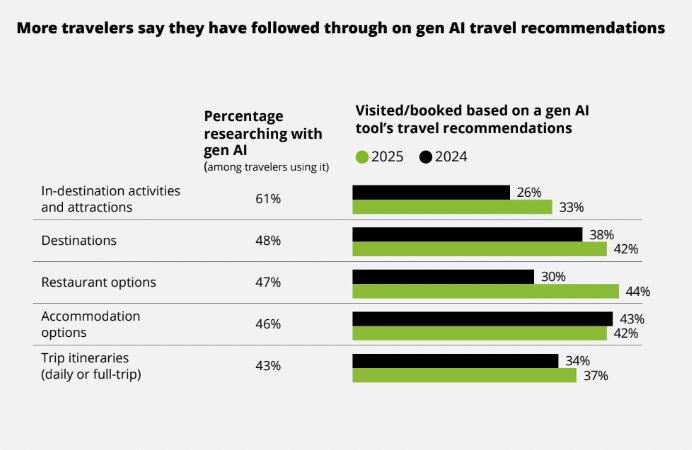
Generative AI is reshaping how both travelers and marketers plan trips and campaigns. Travelers are experimenting with AI tools for destination research, itineraries, and recommendations. On the marketing side, AI can help segment audiences, predict demand, and surface relevant offers almost in real time. When those tools sit on solid data foundations, teams can move from broad targeting to more precise campaigns that focus spending on the segments and offers that convert.
Source: Deloitte
Travelers expect more control over how brands use their information, too. Clear consent, straightforward privacy language, and a focus on value exchange are critical. Brands that demonstrate how data drives better experiences and deals are more likely to earn the trust needed to build robust first-party profiles.
Audit your data, tighten first-party segments, and experiment with AI-driven tools to improve forecasting and personalization. Start with a few clear use cases, such as improving conversion on high-intent landing pages or predicting repeat booking windows, measure the impact on revenue and efficiency, and then expand.
Key stats to know:
- Among travelers who used generative AI in 2025, 61% used it to research activities and attractions at their destinations.
- 15% of travelers used generative AI in their trip planning, per the above report, up from 10% the previous year.
- Industry data indicate a 64% annual increase in AI usage in travel.
Trend 5: The Evolving Role of Social Media and Emerging Platforms in Travel
Social platforms are often the starting point for many travel plans. Short-form video, live streams, and interactive content drive destination discovery as much as traditional search. Platforms are also adding more search tools, reviews, and booking features, enabling travelers to move directly from a clip or post into research and reservation flows.
Social media functions as an inspiration engine, a reputation hub, and a performance channel. Travelers increasingly treat social feeds and search bars as hybrid search-and-review platforms, making relevance and recency especially important. Consistent content, creator collaborations, and structured user-generated campaigns are essential for staying visible. Social listening and community management also matter more, since comments and messages often reveal objections and questions before they show up in performance metrics.
Marketers are also more aware of how travel content affects mental health and expectations. Many people feel pressure to match what they see online, which influences how they evaluate destinations and deals. Brands that acknowledge this reality and focus on honest, grounded storytelling in their social creative are better positioned to build trust, especially with younger audiences who are sensitive to inauthentic messaging.
Treat social media as a full-funnel channel: Invest in video-led storytelling and build processes for sourcing and reusing user-generated content, then use listening tools to track shifts in sentiment so you can adjust creative, messaging, and offers before issues turn into reputation problems.
Key stats to know:
- Social media is the top media channel for Gen Z, with more than half spending at least 3 hours per day on social platforms.
- A Pew Research Center survey showed that 84% of U.S. adults use YouTube, and 71% use Facebook.
- 50% of adults report using Instagram, while 37% use TikTok, per the above study.
Key Takeaways
Relevance and trust drive travel marketing in 2026. Travelers are seeking personal, intentional experiences that align with their values. They’re using mobile devices, social media, and AI tools to plan every step. Younger generations also expect more authenticity, a sharper focus on sustainability, and content that more closely reflects their own experiences.
The path forward is to put audience insight at the center of strategy, then use mobile-first design, creator partnerships, smart data use, and honest storytelling to meet travelers where they already are. Teams that regularly test and adapt to these five trends tend to lower acquisition costs, grow direct revenue, and maintain healthy booking pipelines as travel behavior shifts.
Frequently Asked Questions (FAQs)
What are the most effective digital advertising channels for travel in 2026?
The most effective channels are search, paid social, and your owned channels, such as your site, app, and email. Use search to capture high-intent demand, paid social to generate demand and retarget, and owned channels to convert and drive repeat bookings.
How can travel brands build loyalty through digital marketing?
Build loyalty with a clear program, consistent communication, and offers tied to booking and browsing behavior. Relevance turns one-time bookers into repeat customers.
What are some successful examples of digital travel marketing campaigns?
Jet2 turned an organic TikTok meme around its “Nothing Beats a Jet2holiday” audio into fuel for awareness, then leaned in with platform-native content and challenges to sustain momentum. Wyndham’s “Where There’s a Wyndham, There’s a Way” is a cleaner, brand-led example that unifies multiple hotel brands and Wyndham Rewards under one message and extends it across channels to drive bookings and loyalty.
How is AI impacting the travel marketing landscape?
AI is improving targeting and personalization, accelerating creative testing, and reshaping how travelers research and plan. That makes on-site assistance and smarter offers more important.
What are the key metrics for measuring success in digital travel marketing?
Prioritize cost per booking, revenue per campaign, repeat booking rate, and direct and branded traffic growth. You will see whether efforts are building profit, rather than just vanity metrics.


