
- Trend 1: The Blurring Lines of Online and Offline Retail
- Trend 2: Personalization and Customer Data Platforms in Retail Marketing
- Trend 3: The Continued Growth of E-commerce and Social Commerce in Retail
- Trend 4: The Importance of Sustainability and Ethical Practices in Retail Marketing
- Trend 5: Leveraging Augmented Reality and Virtual Reality in Retail
- Key Takeaways
- Frequently Asked Questions (FAQs)
Retailers face slower growth, higher costs, and tougher competition in 2026. Shoppers are more price sensitive, journeys are more complex, and every channel is crowded. Online retail already represents trillions of dollars in annual sales and a growing share of total spending, so digital choices have a bigger impact on revenue and profit.
The strongest retail brands connect channels, use data responsibly, and take sustainability seriously. They also give shoppers a straightforward path from discovery to purchase. Here are five retail marketing trends shaping how brands plan and measure campaigns in 2026.
Trend 1: The Blurring Lines of Online and Offline Retail
Many shopping journeys span multiple channels rather than remaining in one place. Consumers research on a phone, compare prices on a laptop, and complete the purchase wherever it’s most convenient. Retailers are responding by moving from separate e-commerce and store strategies to unified commerce. Unified commerce means a single inventory view, consistent offers, and a connected identity across web, app, and stores.
Hybrid fulfillment options link online ordering with store pickup. Buy online, pick up in store, curbside pickup, and lockers let shoppers combine online convenience with store speed. Digital campaigns are major drivers of store traffic, using geotargeting, dynamic creative, and clear routes into store locators and pickup options. Mobile apps and loyalty programs help connect these touchpoints when data lives in a single system.
Stats to know about omnichannel retail:
- 96% of global retail executives expect industry revenues to grow in 2026.
- Per the same source, 81% of those executives expect profit margins to expand in the year ahead.
Trend 2: Personalization and Customer Data Platforms in Retail Marketing
Retailers collect substantial first-party data from purchases, browsing, and loyalty programs. Turning that data into experiences that feel helpful without crossing privacy lines is the hard part. Shoppers expect brands to recognize them in simple, practical ways, and they notice when offers, recommendations, or loyalty treatment feel random.
Customer data platforms (CDPs) aggregate transaction history, browsing behavior, and engagement signals into a single profile. Retailers then build more precise audiences for email, onsite tools, native campaigns, search, and social. They can also layer AI models on top to predict what someone is likely to need next. Retail teams are tightening consent flows, preference centers, and guardrails around how AI uses customer data so targeting gets smarter without eroding trust.
What the numbers say about retail personalization:
- 75% of shoppers say a consistent experience across retail websites, mobile apps, email, social media, and stores is important, but only 41% say brands deliver it today.
- Per the same report, 69% of consumers want retailers to anticipate their needs with relevant offers or information at the right moment, yet only 35% think brands are doing so well.
- The report also states that 87% of consumers expect retailers to handle their personal data responsibly and securely, while just 46% believe brands are doing so.
- 45% of retailers report using generative AI to manage customer experiences, says the same study.
Trend 3: The Continued Growth of E-commerce and Social Commerce in Retail
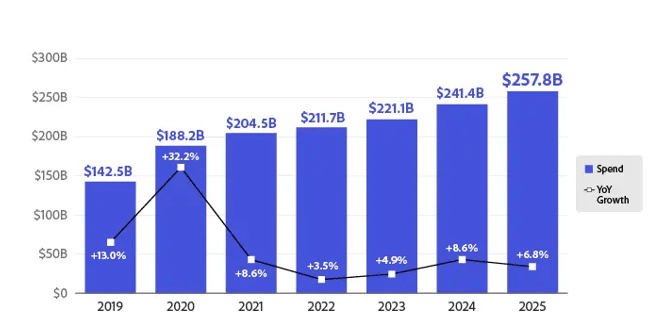
Online sales remain a major part of retail growth, even as competition increases. Growth has slowed from past surges, but continues from a much higher base. Retailers are shifting from simply being online to making e-commerce profitable and predictable. Retail teams are tuning site speed and checkout flows, improving product content, and using marketplaces and retail media alongside owned sites.
Social commerce also plays a big role: Shoppers discover, validate, and buy directly on platforms such as Instagram and TikTok, often without visiting a traditional e-commerce site. Live shopping and short-form product videos are part of this shift. Retailers are testing creator-hosted streams, shoppable videos, and vertical ad formats to shorten the path from discovery to checkout. Native on the open web remains important for capturing demand beyond closed ecosystems and driving qualified traffic to optimized product pages and content.
Source: Adobe
E-commerce and social retail by the numbers:
- U.S. shoppers spent $257.8 billion online during the 2025 holiday season from November 1 to December 31, an increase of 6.8% year over year.
- Consumers spent more than $4 billion online in a single day, on 25 different days during the 2025 holiday season, up from 18 such days in 2024, per the same report.
- The report adds that mobile shopping accounted for 56.4% of online transactions during the 2025 holiday season, and 66.5% of online sales on Christmas Day.
- Traffic to retail sites from generative AI tools during the 2025 holiday season was up 693.4% compared with the prior year, according to the report linked above.
Trend 4: The Importance of Sustainability and Ethical Practices in Retail Marketing
Sustainability has become a key factor for many shoppers, especially in fashion and beauty. People want clear information: They want to know what materials you use, how you source, how you package, and whether you’re improving.
Source: Shorr
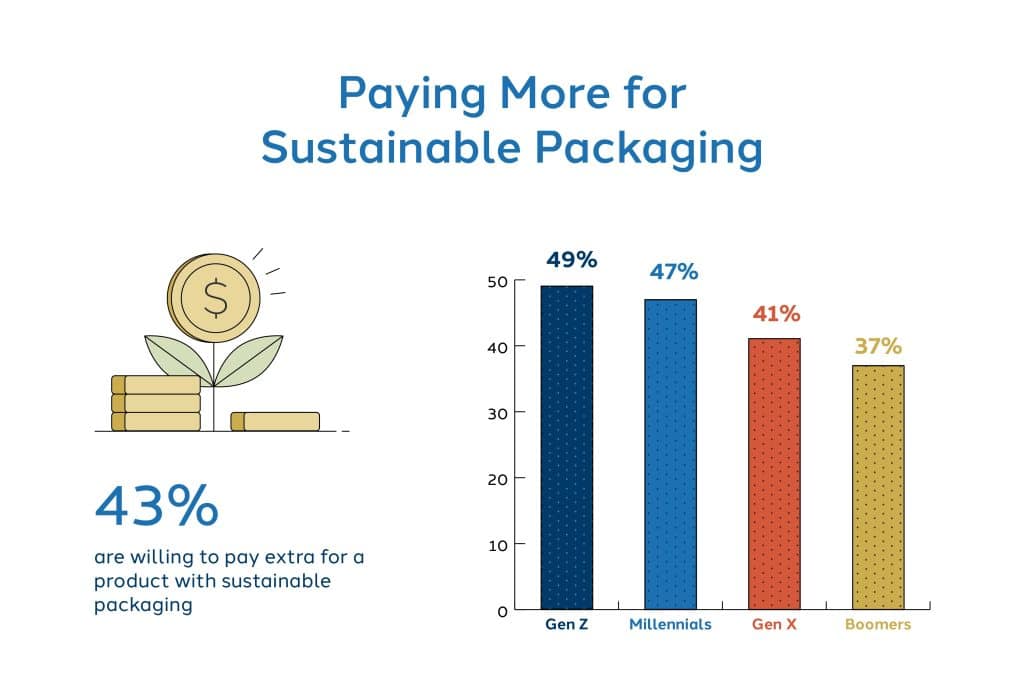
Retailers that take this seriously are tying marketing to real work in product development and operations and publishing clearer impact numbers. They’re also testing circular models like resale, take back, and repair programs. The challenge is credibility: Shoppers are willing to pay more for sustainable products, but they don’t automatically believe brands’ claims. Brands earn trust when they share clear information and real examples. Digital campaigns can support this by using native articles, video, and sponsored content to explain how sourcing, packaging, and community work are changing.
Key numbers on ethics and sustainability in retail:
- 54% of consumers report consciously purchasing products with sustainable packaging in the last six months.
- 90% of consumers say they are more likely to buy from brands that use sustainable packaging, per the same report, and 43% of consumers are willing to pay more for a product with sustainable packaging.
- The report adds that 39% of consumers report switching to a competing brand because that brand offered more sustainable packaging.
Trend 5: Leveraging Augmented Reality and Virtual Reality in Retail
Augmented reality (AR) and virtual reality (VR) are shifting from novelties to useful tools that help shoppers decide what to buy. AR fits naturally into mobile-first journeys, letting people see how a sofa looks in their living room or how glasses fit their face, either at home or in a store. Retailers are using AR for try-ons, room visualization, and richer product information on shelves and packaging. Good AR experiences mean fewer surprises after delivery and fewer returns in categories like fashion and furniture.
Most VR use in retail still centers on high-involvement purchases and brand experiences. Broader AR market forecasts and consumer adoption data indicate retailers are testing these tools now rather than waiting. For advertisers, AR and VR show up in shoppable lenses, 3D product previews on mobile landing pages, and interactive ad units that let people try or place products before they click through. These formats can increase time spent with a product and help nudge people closer to purchase.
Stats to know about AR and VR in retail:
- The global AR in retail market is projected to grow from $7.84 billion in 2024 to $105.87 billion by 2033, at a compound annual growth rate of 32.4%.
- In recent retail AR surveys, about 61% of consumers prefer retailers that offer AR experiences.
- In the same research, nearly half of consumers say AR content on packaging would increase their loyalty to a brand.
Key Takeaways
Retail marketers need to connect in-store and online experiences, use first-party data more effectively, and keep e-commerce and social commerce profitable. Shoppers also weigh how brands handle sustainability and how helpful tools like AR and VR feel in practice. Strong brands treat these trends as part of a single plan and use them together to make shopping simpler and more useful.
Frequently Asked Questions (FAQs)
What are the most effective digital advertising channels for retail in 2026?
Retailers see better performance by combining search and shopping ads for intent with social, native, and retail media for discovery. Those channels work best when they drive people to clear product pages or store visits.
How can retailers combat online competition?
Skip the price war. Improve the experience, offer convenient pickup and delivery, invest in honest product content and AR tools, and use loyalty programs that reward repeat buyers.
What are some successful examples of retail digital marketing campaigns?
American Eagle’s “good jeans” campaign with Sydney Sweeney ran across social, video, and stores, generated tens of billions of impressions, sold out key items, and helped lift the company’s stock after strong earnings. E.l.f. Beauty’s “Give an e.l.f.” campaign tied bold creative and high-visibility out-of-home placements to its impact report and multimillion-dollar giving, reinforcing the brand’s values and supporting continued sales and investor momentum.
How is AI impacting the retail marketing landscape?
AI already supports targeting, bidding, recommendations, creative testing, chatbots, forecasting, and pricing. Teams get the most value when they share those insights across channels and set clear rules for data use and privacy.
What are the key metrics for measuring success in retail digital marketing?
Track revenue, margin, and profit by channel, along with customer acquisition cost versus lifetime value. Teams should also watch conversion rate, average order value, returns, key engagement metrics, and, for omnichannel retailers, store traffic and offline sales linked back to digital campaigns.


