
- Trend 1: The Power of Visual Content and Immersive Experiences in Real Estate
- Trend 2: Hyperlocal Targeting and Personalized Communication in Real Estate
- Trend 3: Leveraging Social Media and Building Online Presence for Real Estate
- Trend 4: The Importance of SEO and Local Search for Real Estate Discovery
- Trend 5: Data Analytics and CRM for Effective Real Estate Lead Management
- Key Takeaways
- Frequently Asked Questions (FAQs)
From immersive visual content to analytics-driven tools, real estate professionals need to fully understand the importance of monitoring trends in 2026. Here, I’ll run down five of the most powerful trends shaping the future of real estate marketing.
What’s changed in our 2026 update:
- All entries include updated and current information and advice.
- All stats and figures updated with new and current information.
- Two new graphs/graphics added.
Trend 1: The Power of Visual Content and Immersive Experiences in Real Estate
Visuals have always been an important part of selling a home. Buyers want to see photos of every aspect of a property, from the front yard to the tiny guest bathroom on the main floor. In 2026, brokers are leaning into the power of video, AI, and human content to sell homes, including virtual staging, a tool that continues to spark debate.
Here are a few essential statistics that showcase the power of visual content in 2026:
- Video dominates in 2026, with video listings boosting inquiries by 403%.
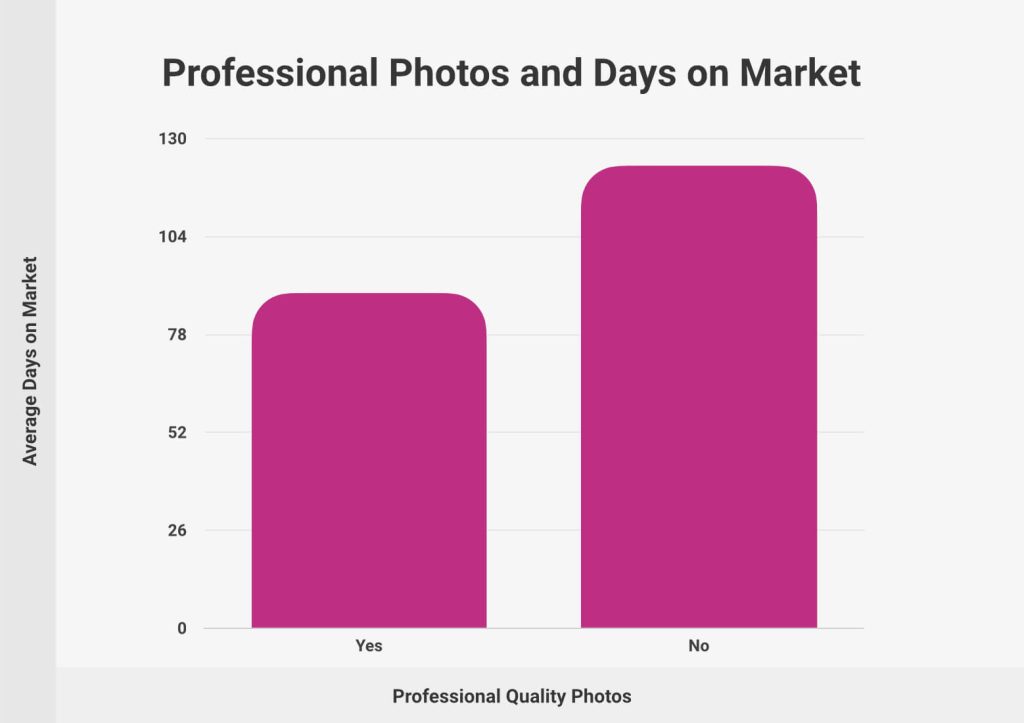
- Homes/listings with professional photos sell 32% faster, spending an average of 89 days on the market as compared to 123 days.
- Buyers spend about 60% of their time looking at photos, versus only 20% reading property descriptions.
- 60% of buyers’ agents say staging has an effect on some buyers, but not always.
Source: RubyHome Luxury Real Estate
Tools like virtual tours and 360-degree interactive experiences allow buyers to view listings from wherever they are. This is especially beneficial for out-of-state buyers who can’t travel to look at every property that goes on the market. Augmented reality is still relatively new to the industry, but the future possibilities are endless: Imagine buyers being able to stand in a living room and virtually incorporate their existing furniture, or change paint colors.
Visual content goes beyond listings, though. In 2026, competitive real estate professionals repurpose assets across platforms, including on social media. By taking advantage of the popularity of video on social media, agents can reach buyers before they’re browsing multiple listing service (MLS) listings.
Trend 2: Hyperlocal Targeting and Personalized Communication in Real Estate
Authenticity and relevance are more than marketing buzzwords. Across all industries, marketers have realized the value of personalizing their messaging, and real estate is no different. In 2026, the industry has found that consumers respond to agents who understand their neighborhood: From local school ratings to the best coffee shops, agents who position themselves as community experts build stronger, more lasting client relationships.
In 2026, hyperlocal marketing has become a game-changer. Search trends back this up: Search queries using keyphrases like “real estate agent near me” and “houses for sale near me” are more popular than ever, driving a need for industry professionals to claim their Google Business Profile (GBP) and focus on local marketing.
Personalization continues to be key for real estate agents wanting to stand out. Digital advertisers can help real estate marketers create ads that target:
- First-time homebuyers.
- Property investors.
- Sellers/buyers in a specific zip code.
- Buyers who are actively looking.
- Buyers within a certain demographic.
- Buyers with certain interests.
Here are some top trends to help inform your marketing strategies in 2026:
- In 2025, 66% of sellers worked with an agent referred to them, or one they’d used before.
- Reputation remains a key factor in choosing an agent. 35% of sellers say they considered an agent’s reputation when making their choice.
- REALTORS® choose text messaging as their top communication channel, with 94% using it, followed closely by phone and email.
- Searches for “real estate agent near me” have increased 41-fold since 2015, with approximately 14,000 searches per month.
It should be noted, though, that privacy concerns have impacted the way real estate professionals target. The National Association of REALTORS® has strict standards for data collection and use, and that information can be valuable for anyone working in the industry.
Trend 3: Leveraging Social Media and Building Online Presence for Real Estate
Like other marketers, real estate agents know that social media is the key to reaching today’s homebuyers. Here are some key statistics related to building an online presence in 2026:
- 82% of real estate businesses market through social media.
- Facebook remains the dominant platform for real estate agents, used by about 90% of agents, followed by Instagram (52%) and LinkedIn (48%).
- Around 63% of real estate agents use video content in their social media marketing strategy.
- Video content on social media is shared about 12x more than text and image-only posts.
- According to tech usage data, about 75% of agents use social media to build their brand and connect with clients online.
Today’s real estate professionals go beyond promoting listings by posting engaging content like local community highlights, the stories behind homes they’ve listed, and behind-the-scenes glimpses of their daily lives. While Facebook and Instagram remain important, agents are also optimizing content for YouTube Shorts and TikTok search, treating these platforms as mini search engines.
Video is the real standout this year. The industry now has the opportunity to engage both buyers and sellers without investing heavily in advertising: Short-form video content is more popular than ever, giving agents the opportunity to share quick tours, highlight a home’s key features, or walk through the closing process.
Live video is one of the most popular social media trends impacting the industry. Videos don’t even have to be polished: One New York City real estate agent shares walk-throughs shot using his phone to impressive success. Agents can also share live videos showcasing their latest listings or responding to typical questions to engage potential customers.
Trend 4: The Importance of SEO and Local Search for Real Estate Discovery
In 2026, home shopping starts with a search, but that’s nothing new. One thing that has changed, though, is the way people search. Instead of typing in keywords like “new homes for sale,” today’s savvy online shopper incorporates details like towns or neighborhoods. That’s where local search comes in.
- 46% of all Google searches have local intent.
- Google’s Local Pack drives 44% of local search clicks.
- Organic search dominates clicks, capturing roughly 94% of total search (versus paid).
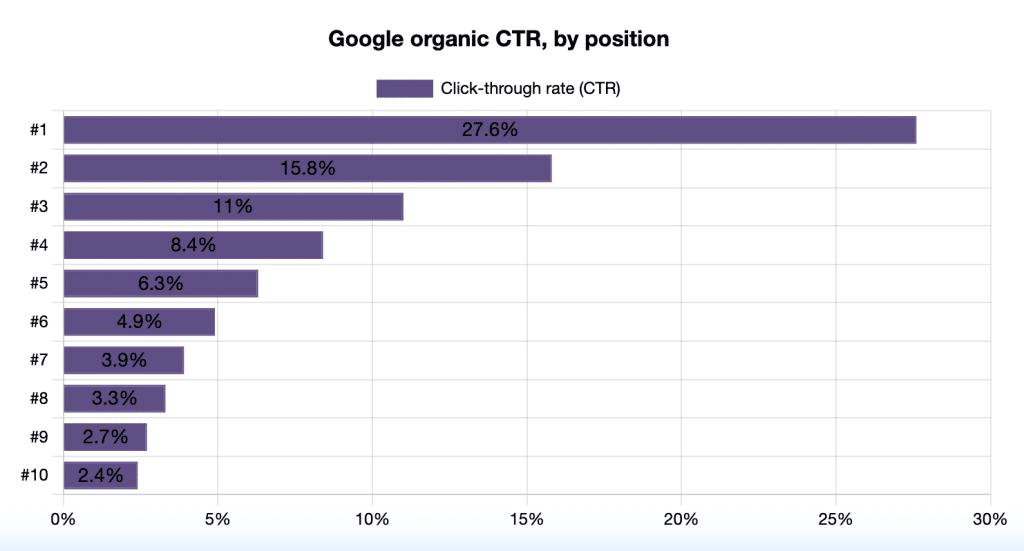
- The top organic search result typically earns about 27.6% of all clicks, and click share drops sharply further down the page.
- Over 50% of search queries include four or more words, indicating long-tail keywords continue to be important.
Source: Digital Silk
So what can a real estate agent do to reach today’s home shoppers? Localization is key. Long-tail keywords incorporating community information can go far in reaching buyers, as can maintaining consistent NAP (name, address, and phone number) across the web. But, one of the most important things a real estate professional can do is to claim their GBP, since those listings get priority in search results.
Reviews are another important SEO aspect. Google weighs reviews heavily when prioritizing businesses in local search, so encouraging reviews can make a big difference. If you can generate a steady stream of positive reviews, you’ll keep the algorithms happy.
Trend 5: Data Analytics and CRM for Effective Real Estate Lead Management
It’s no longer enough to generate leads: To remain competitive, you’ll need to effectively manage those leads. Customer relationship management systems (CRMs) make it easy to track the origination of each lead, how those leads engage with your content, and what actions they’ve taken. Agents can then automate follow-ups and segment contacts to stay in front of potential clients with minimal effort.
Once leads have made their way into your ecosystem, you can use data analytics tools to measure the effectiveness of every dollar you spend to bring them there. Urchin Tracking Modules (UTMs) and CRM integrations can help you follow a lead from the initial click to closing.
Artificial intelligence is also transforming the way real estate professionals market. AI-powered tools can analyze past buyer behavior and use that information to predict future actions. This allows professionals to prioritize the leads most likely to convert. The industry is also learning that personalizing the user experience can get better results.
- Real estate agents who use a CRM system see a 41% increase in lead conversions.
- 54% of agents say that AI tools help with identifying high-quality leads.
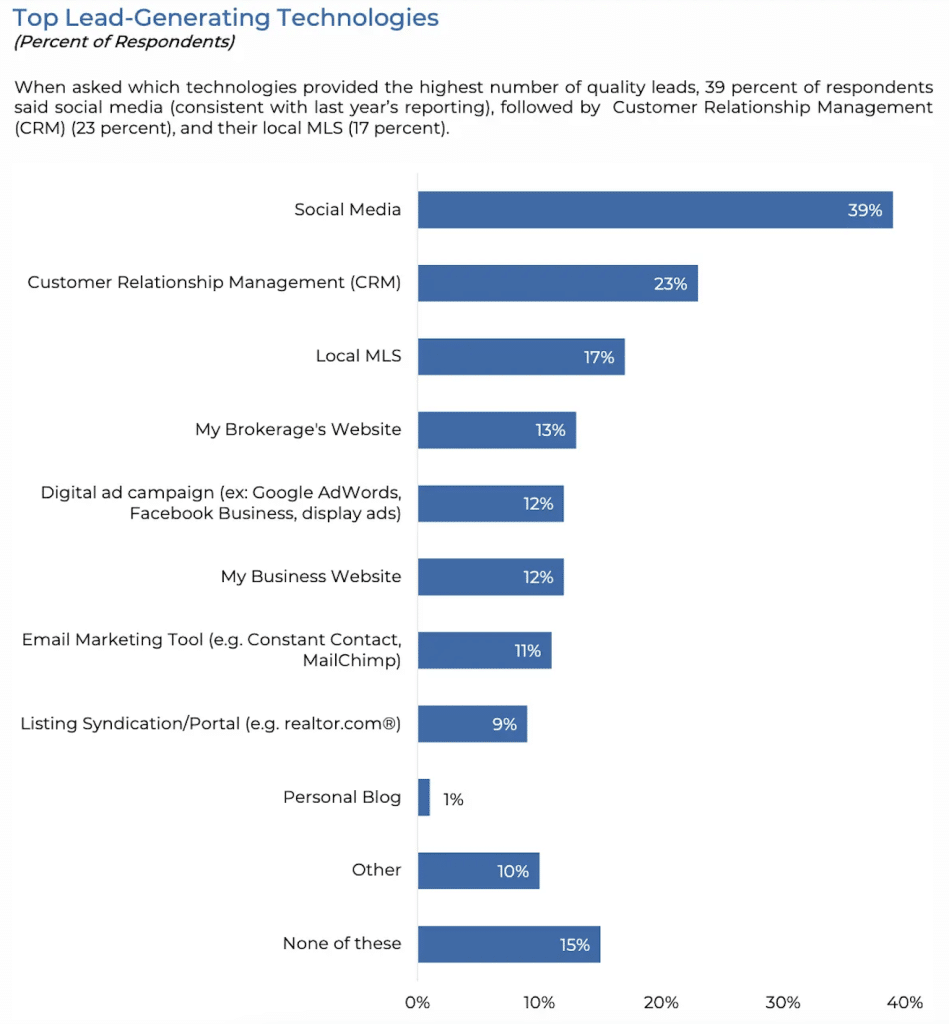
- REALTORS® report social media as the top source of quality leads, at 46%, followed by CRM at 23%.
- 90% of marketing professionals use AI to streamline customer interactions.
Source: National Association of REALTORS®
As you cultivate and track leads, here are some important data points to get you started:
- Search behavior and keywords used: What search terms led a high-converting lead to your site? This data point is useful for gathering information on your target customers, and that information can be used for future advertising and SEO campaigns.
- Time spent on listing pages: When a customer hangs out on your listing pages for a while, it can be a sign of an interest in a particular location, home layout, or price range. If visitors seem to engage heavily with certain types of content, such as your virtual tours or videos, you can use that data to inform future efforts.
- Lead source attribution: One of the best things about analytics is its ability to track the origin of incoming leads. Over time, this gives you a picture of the marketing efforts that pay off most.
- Click-through and bounce rates: If people are coming to your listings and quickly leaving, it could be an indication that something’s off. In many cases, it simply means your ads are hitting the wrong targets, but it can also signal that your visual assets need improvement.
- Mobile vs. desktop usage patterns: More homebuyers than ever are conducting their search on mobile. Still, it’s important to look at the habits of your own customer base.
Key Takeaways
Today’s real estate professionals are leaning in heavily to assets like immersive visuals and video tours to boost engagement and listing velocity. But, it’s also important to localize your marketing efforts to adapt to the way consumers search for homes in 2026. Social media is another way to reach potential clients, with short-form, social-native video serving as the most popular format. Real estate professionals should also consider CRMs for improved lead generation and AI-assisted analytics to measure return on investment (ROI).
Frequently Asked Questions (FAQs)
What are the most effective digital advertising channels for real estate in 2026?
In 2026, real estate professionals are finding success by combining strong visual appeal with precision targeting. While social media platforms like Facebook and Instagram remain powerful, thanks to their robust user base and location-based targeting, the continued dominance of short-form, social-native video has made platforms like TikTok and YouTube Shorts increasingly popular, as well.
For intent-driven targeting, Google Ads and Google Local Inventory are still the top contenders for marketing spend. Today’s serious homebuyers and sellers search using terms like “homes for sale in [city]” or “real estate agents near me.” Agents can capture clients with retargeting ads, video-based ads, and local-first placements to stay in front of clients throughout their house-hunting journey.
How much should a real estate agent spend on digital marketing?
Marketing budgets can vary dramatically from one real estate agent to another, but generally speaking, the average agent only allocates 10-20% of their budget on marketing. Digital is a large part of that spend, but many agents also rely heavily on free options like social media marketing.
A typical monthly marketing budget might look something like this:
- Paid social ads: $300-$1,000.
- Google Ads: $200-$800.
- Video content and editing: $150-$500.
- Marketing tools: $50-$300.
Marketing spend is only one part of the picture, though, and it’s important for agents to closely track their efforts to maximize ROI. Track cost per lead, time to close, and lead quality, in addition to conversion rates, to ensure you’re putting your time and money toward efforts that get results.
What are some common digital marketing mistakes real estate professionals should avoid?
Real estate agents have access to more tools than ever to power their digital marketing efforts. But, those tools need savvy marketers to come up with sound strategies and execute them. Whether you’re starting a new campaign or identifying issues with your current marketing efforts, it’s important to watch for some things that can go wrong.
- Using inadequate or outdated visuals: Listings with professional-quality photos and videos tend to get better results. Today’s home shoppers expect immersive visuals that give them a clear picture of the property.
- Failing to claim or optimize a Google Business Profile: In just a few minutes, at no cost whatsoever, you can claim your Google Business Profile, which will help you appear in local search results and on Google Maps.
- Spreading efforts too thin across platforms: It can be tempting to have a presence on every social media platform available, but it’s best to channel all your efforts into a select few platforms that best represent your target audience.
- Not tracking performance: Without tracking, it’s nearly impossible to know what’s working. Today’s tools make it easy to measure everything from clicks to conversions.
- Ignoring online reviews: When searching for an agent, consumers tend to go with recommendations from others. Online reviews can drive buyers and sellers to your business, so it’s important to find ways to encourage them and respond to them.
How can real estate professionals build trust online?
Trust starts with user experience. Make sure your websites and listings are accessible whether customers are on a mobile device or desktop. You can also build trust by maintaining an active, authentic social media presence and a Google Business Profile with updated contact information.
Responsiveness is another key way to show your trustworthiness. Reply to comments and answer any inquiries promptly to not only build trust, but also show clients you’re reliable.
Video content is a great tool for trust building. Even something as small as showing your face while walking through a neighborhood or discussing new listings can humanize your brand. The old adage that people do business with people they like definitely applies to real estate. By being accessible, you’ll compel clients to bring you along on their homebuying journey.
What are the key metrics for measuring success in real estate digital marketing?
The best metrics depend on your goals. If you’re hoping to measure success in your digital marketing efforts, here are some good metrics to follow:
- Engagement.
- Lead generation.
- Click-through rates.
- Video view duration and completion rate.
As customers move through the funnel, here are some metrics that can be useful:
- Time spent on site.
- Bounce rates.
- Listing saves and shares.
When measuring how your new leads are doing, take a look at the following:
- Inquiries per listing.
- Cost per lead.
- How leads move through your CRM pipeline.
Lastly, it’s important to track conversions. Are those leads turning into clients? The following are the ultimate indicators of success in your marketing efforts:
- Appointment bookings.
- Showings.
- Closed deals.


