
For years, B2B (business-to-business) social media followed a fairly predictable playbook: corporate product announcements, stock-photo-heavy “thought leadership” snippets, and a dogged focus on moving traffic off-platform to gated whitepapers.
Today’s winning marketing teams have tossed that playbook out. Instead of acting like faceless corporations, they’ve created a media ecosystem of experts. Marketers understand that while artificial intelligence (AI) is great for repurposing and scaling content, only humans can scale trust.
Social media functions as a primary channel for cultivating brand awareness, generating leads, and fostering professional relationships. It allows companies to establish thought leadership, deliver targeted content to decision-makers, and nurture long sales cycles.
Understanding the latest B2B social media marketing trends can help you strategize your approach, positioning your brand to stand out from the competition and thrive. Keep reading for the latest stats, plus tips on how to implement these strategies into your 2026 marketing playbook.
Key Roles of Social Media in B2B Marketing
Social media serves as a robust complement to any content marketing strategy. It helps with:
- Brand awareness and authority: Building credibility through consistent, professional content, and positioning the company as an industry expert.
- Targeted lead generation: Reaching specific, high-value decision-makers through targeted advertising and content distribution on platforms like LinkedIn.
- Relationship nurturing: Engaging with prospects and clients directly, fostering trust, and guiding them through complex, long-term sales cycles.
- Content distribution and SEO: Sharing whitepapers, case studies, and blog posts to drive traffic to websites and enhance search engine optimization (SEO).
- Social proof and humanization: Showcasing client success stories and humanizing the brand to build credibility in a high-risk purchasing environment.
Per figures shared by Book Your Data:
- 97% of B2B companies use social media.
- 74% of consumers use social media to guide purchasing choices.
- 62% of B2B companies have earned positive return on investment (ROI) from ads on social media.
- 94% of B2B marketers have used social media platforms to distribute content.
B2B Social Media Marketing Trends
In 2025, over 65% of the world’s internet users engaged with social media — that’s over 5 billion social media identities. 58% of consumers said they “found” new businesses on social media, which has become the primary channel for discovery. Those numbers are huge, and marketers have adjusted their budgets to account for the more than two hours most people spend on social media each day. Per DreamGrow:
- Mobile platforms will generate 83% of total social media ad spend by 2030.
- Average social media ad spend per user will be over $265 by 2028.
- Social media has become the fastest-expanding advertising channel, with ad spend increasing by over 10% YOY.
- Social was a top focus for 93% of marketers in 2025.
Let’s look at some trends in more detail.
LinkedIn Dominates B2B Social Media Marketing
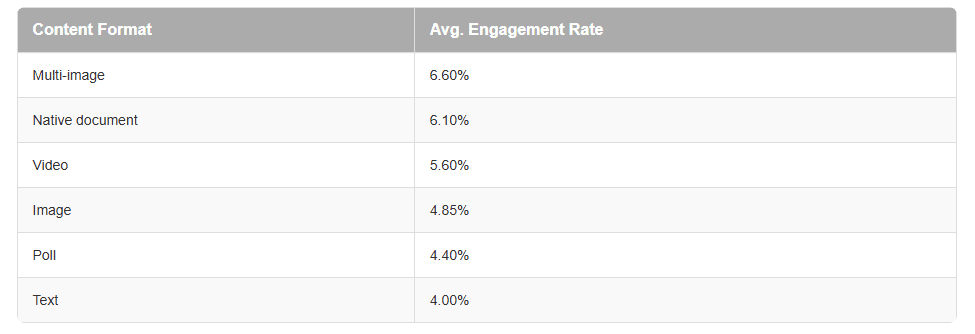
Facebook, Instagram, and TikTok remain popular for personal social media use, but LinkedIn remains the top social media platform for B2B communities. Engagement, which has increased 30% YOY, includes:
- 6.6% for multi-image posts.
- 6.1% for native documents.
- 5.6% for video.
Content format performance for 2025
[Source: LiSeller AI]
The same source projects that LinkedIn’s base will grow by over 22% between 2024 and 2028, increasing the potential to grow audiences significantly. The Content Marketing Institute adds that 84% of B2B marketers credit LinkedIn with delivering “the best value to their organization as a social media platform.”
That said, while LinkedIn remains the top go-to social media platform for B2B marketing, marketing teams haven’t discounted the other platforms. 79% of B2B marketers use Facebook, followed by X/Twitter (60%), Instagram (60%), and YouTube (56%). Naturally, TikTok is hot on these platforms’ heels — its user growth rate hit 100% between 2020 and 2022.
Videos Are In
Videos have become another language of B2B commerce. With video content projected to command 82% of all internet traffic this year, marketers must capitalize on this medium.
As buyer attention spans shrink, short-form video has emerged as the highest-ROI social strategy for B2B. Platforms like LinkedIn, TikTok, and YouTube Shorts allow brands to trade high-gloss production values for raw, human authenticity — a shift resonating deeply right now with audiences fatigued by corporate polish.
Since shorter clips are easier to consume (and remember), they’re effective at driving information retention. When a buyer sees and hears an expert’s perspective in a 60-second burst, the interaction feels less like a sales pitch and more like a conversation.
Strategic Interaction Across the Funnel
Today’s landscape welcomes video integration across every touchpoint. Marketing teams can embed it in personalized outreach, interactive product demos, and offline-to-online transitions via QR codes. Leverage its dominance by:
- Using behind-the-scenes peeks and work culture clips to build rapport.
- Transforming dry case studies into higher-impact testimonial videos.
- Answering FAQs and complex technical questions through rapid-fire visual explainers.
- Leveraging LinkedIn’s video-based solutions to place expert insights directly alongside premium publisher content, driving higher lead conversion rates.
- Using real-time livestreams to demonstrate products and build trust through unscripted transparency.
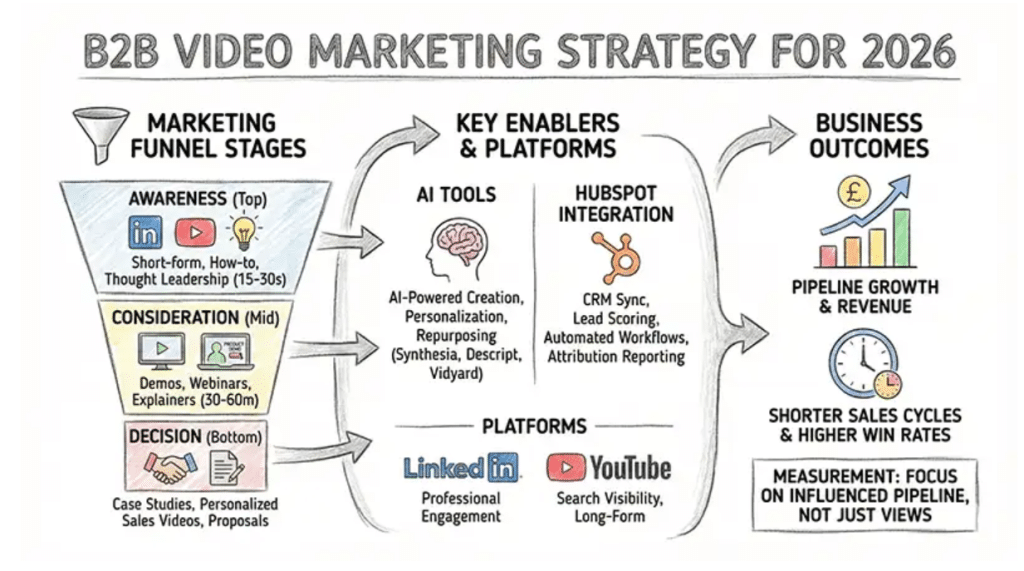
Just remember, authentic doesn’t mean low quality: A brand’s credibility hinges on strategic messaging and creative clarity. While long-form and live videos work well for deep-funnel education, the brands winning the market are those who’ve mastered the art of the micro-narrative. They can distill complex expertise into digestible, engaging stories that capture attention in an overcrowded feed. This year, Whitehat SEO predicts that 91% of businesses will use video as a marketing tool, and 92% of businesses will allocate at least the same (or more) of their ad spend on video marketing.
[Source: Whitehat SEO]
Carousel Posts Help Educate
Educational carousels have evolved from simple slide decks into mini landing pages that generate up to 3.1x higher engagement than static posts. Static posts still serve a purpose: they’re great for high-impact announcements or single-product spotlights, and can instantly deliver a focused message without requiring user effort. Carousels, however, are designed for depth. These swipeable decks — up to 10 slides on Instagram, 35 on TikTok, and 15+ on LinkedIn, although the sweet spot is typically 5-8 slides — use a proven structure: a hook to stop the scroll, value to educate, and a call-to-action (CTA) to convert.
The swipe is a powerful engagement signal. By inviting active participation, carousels increase dwell time, which tells platform algorithms that you’re offering high-quality content. Per PostNitro:
- On Instagram, carousels average a 0.55% engagement rate vs. 0.45% for static images.
- Image carousels on TikTok see 81% higher engagement than standard video posts.
- Carousels often net 13% higher reach for large accounts because platforms may re-display the post starting with the second slide if a user initially scrolls past the first.
Contensify suggests the following use cases for educational carousels:
- A breakdown of a technical process or framework.
- A before-and-after case study, where slides show the problem, solution, its implementation, and the final ROI.
- An FAQ deep dive addressing common buyer objections or pain points, one slide at a time.
- A “state of the industry” report, visualizing data through charts and graphs.
- An opportunity to humanize the brand with behind-the-scenes culture narratives.
The key takeaway for carousels? Treat each as a standalone educational product. If a user learns something valuable without ever leaving the app, they’re more likely to remember your brand when they finally enter the buying cycle.
Voice Search Optimization Is Growing
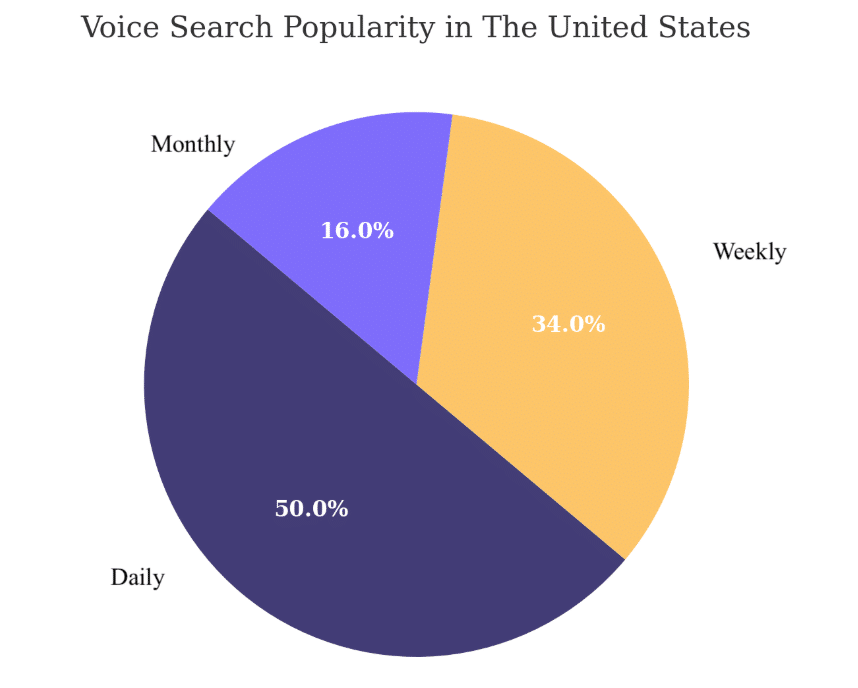
According to NewMedia, “Voice search integration in social media platforms has grown by 22% YOY.” B2B search behavior has also moved toward conversational discovery, thanks to over 8 billion voice-enabled devices (and AI assistants). Text searches are often fragmented (e.g., “B2B CRM security”), but voice queries are context-rich and full-sentence (e.g., “Which CRM has the best encryption for a mid-sized healthcare firm?”). Currently, over 20% of internet users globally use voice search.
If you’re not already pivoting toward answer engine optimization (AEO), a subset of SEO designed specifically for AI-generated summaries, you risk getting left behind. Capturing the featured snippet (position zero) is key, since more than 40% of answers are pulled from it.
Local context is important, too, and becoming a strategic advantage for regional B2B companies. Buyers are increasingly using voice search to find nearby partners, logistics hubs, or service providers. Optimizing your Google business profile and keeping your NAP (name, address, phone) data current are essential for B2B voice visibility. Optimizing your website performance will help, too.
[Source: Improvado]
Personalization Is Still Key
Thanks to AI-powered tools, the B2B gold standard for personalization has moved past the name tag approach and embraced agentic personalization. AI can help orchestrate entire buyer journeys in real time, enabling marketing teams to personalize at scale and treat every account as a unique entity without having to increase headcount (or work 60-hour weeks).
Traditional B2B marketing relied on broad industry segments. Today’s hyper-personalization uses real-time behavioral data and predictive analytics to anticipate buyers’ pain points before they’ve even been articulated. Now, marketing teams can lean even more into customized ad targeting, email campaigns, and other lead-generation strategies.
Marketing teams can use AI tools to take a single hero asset, like a whitepaper, and automatically remix it into dozens of industry-specific landing pages or personalized video clips in minutes — and make sure the right audiences see it. Technology in 2026 allows websites to recognize the company behind an IP address, dynamically changing headlines and case studies to match a visitor’s specific vertical on the first page load.
Despite their heavy reliance on automation, B2B companies are remembering the value of human authenticity: Automation handles the scale while humans provide the validation. AI may deliver the content, but companies must ensure that data privacy — prioritized by 90% of consumers — is ironclad.
Marketing teams using zero-party data (i.e., data given willingly) can create customer profiles in their CRM platform, using them to craft and deliver more personalized experiences throughout the entire sales journey, from that initial discovery to the final sale.
In B2B sectors where the sales cycle can span six to 18 months, AI-driven personalization may make the difference between staying top of mind and fading into background noise. The benefit of this personalization is funnel optimization — using data to ensure that every long-term touchpoint provides incremental value rather than repetitive annoyance. AI-powered personalization can:
- Close the boredom gap: If a prospect stops looking at features and starts looking at security documentation, for example, AI recognizes the transition and automatically updates their personalized hub with compliance whitepapers.
- Personalize at the individual level within a single account: Since B2B deals are typically orchestrated by committees, an IT director may receive API documentation via LinkedIn, whereas the procurement lead might see a sponsored post about simplified billing workflows on their feed, for example.
- Identify high-intent accounts by cross-referencing firmographics with behavioral patterns: E.g., three people from the same company visiting the pricing page over two days. Lead volume can create a distraction for teams with long cycles, but AI-driven personalization can focus the outreach on the most promising users.
- Use AI to proactively identify renewal and upsell opportunities by analyzing product usage data: Personalization shouldn’t stop at the closed-won stage!
By using AI to synthesize massive streams of engagement data across the social media ecosystem, companies can accurately forecast which stakeholders are approaching that next step in the buying process. Predictive intelligence empowers marketing teams to deploy the right content and outreach at the moment when it will have the most impact. By focusing resources on these high-probability conversions, teams can reduce dead time in the funnel, accelerate the path to purchase, and boost overall ROI.
Influencer Marketing Is Growing in B2B
Once viewed as the exclusive domain of lifestyle and fashion brands, influencer marketing is in the spotlight in 2026. As mentioned earlier, buyers want human-to-human validation in an era that’s heavily reliant on serving up automated content. Today’s buyers prioritize relevance and technical knowledge over follower counts. There’s been massive growth in partnerships with micro-influencers — those niche experts who run active online communities and share the good, bad, and ugly insights.
Per B2B Marketing Expo:
- Companies are using influencers for deep-dive product reviews.
- Influencers are creating and delivering educational content, contributing to industry reports, hosting webinars, and helping brands reach more target audiences.
- “Social media platforms are prioritizing educational and community-driven content.”
B2B audiences value and expect to see relevance and expertise. Marketers who succeed this year are those who grant influencers the creative freedom to share honest, practitioner-led experiences rather than forcing them to read a corporate script.
Content Remains Strong
The era of noise for the sake of noise — and a publish-or-perish philosophy — has ended. Successful B2B marketers have traded daily, generic blog updates for more granular resources, interactive tools, and evidence-based video content that’s human. Does this new approach toss out daily posting entirely? Not at all! But, content must serve a purpose rather than exist merely to take up space.
Efficiency is the new benchmark. Instead of creating isolated posts, marketing teams are treating high-effort (and more expensive) productions, like a single podcast episode or educational webinar, as a content engine. What helps? AI-powered tools that can systematically disassemble a single recording or video into a series of audio nuggets, visual testimonials, and long-form articles, so every asset works harder across multiple platforms — including social
media.
According to a FocusVision report, average B2B buyers read 13 pieces of content during their journey. Some studies suggest this number can go as high as 17 to 27 touchpoints for high-ticket enterprise solutions.
Social media plays a big role in the research phase. Roughly 55% of buyers use B2B social media as part of their purchasing process, and 77% read user reviews. According to Sopro and its State of Prospecting 2026 report:
- 58% of B2B buyers use multiple channels for outreach, but only 21% coordinate across channels.
- 78% of B2B businesses say email is the top lead gen channel, followed by 51% paid social media.
- In 2025, 44% of B2B professionals named LinkedIn as their top social platform.
The top content that wins and influences B2B buyers?
- Short articles (92%).
- White papers (71%).
- Case studies (69%).
Social media remains a critical entry point of the modern B2B buying journey. Marketing teams that prioritize brand awareness and native education will transition prospects from initial discovery to deeper consideration phases in the funnel. Consistent, high-value posting keeps your brand and its solutions top of mind until the prospect is ready to evaluate new vendors.
The most resilient B2B content strategies are those unifying search everywhere optimization, demonstrated authority, and proactive education with a human touch.
Key Takeaways: B2B Social Media Trends in 2026 and Beyond
AI continues to play an increasingly large role in daily operations across all industries, including marketing. But, people crave a more human-centric approach, and subject matter practitioners and AI-enhanced personalization have become key. Brands can use agentic personalization to recognize prospects in real time and dynamically serve tailored insights with AI’s help. This strategy ensures that long-term nurturing remains valuable, not redundant.
Discovery has shifted from keyword matching to conversational authority, with AEO gaining ground as a solid approach to winning visibility in the AI-driven search landscape. To capture attention in overcrowded social media feeds, successful teams are leveraging micro-narratives through short-form video and educational carousels. Recognizing people’s natural skepticism about how well companies protect data privacy, many B2B marketing teams are prioritizing zero-click value, delivering expertise natively on social platforms to build the trust needed to encourage and support the modern buyer’s journey.
Frequently Asked Questions (FAQs)
What is B2B social media strategy?
B2B social media strategy is a structured plan used by businesses to build authority, nurture professional relationships, and engage decision-makers across social platforms to drive sales. In 2026, the strategy focuses on hyper-personalization and taking a human approach (and not simply diverting traffic to corporate websites).
What is the best social media platform for B2B marketing in 2026?
LinkedIn remains the dominant platform, with B2B marketers ranking it as their most used social media platform in 2025. While niche platforms like TikTok are growing, and Facebook, Instagram, and YouTube remain key for certain industries, LinkedIn’s specialized tools for professional micro-narratives and document-sharing make it the primary hub for B2B communities and social media marketing.
What are the social media statistics for B2B?
B2B social media marketing statistics remain quite robust, with platforms collectively driving over 60% of product discovery (compared to Google’s 34.5%). Statista projects that in 2026, global ad spend on social media will reach over $317 billion, with the U.S. accounting for more than $118 billion of that total.


