
- Trend 1: The Dominance of Short-Form Video and Engaging Visual Content
- Trend 2: The Rise of Niche Communities and Authentic Engagement
- Trend 3: The Evolution of Social Commerce and Direct-to-Consumer Sales
- Trend 4: Leveraging Data and AI for Personalized Social Media Marketing
- Trend 5: Navigating Platform Changes and Emerging Social Media Trends
- Key Takeaways
- Frequently Asked Questions (FAQs)
The only thing guaranteed when working with social media marketing is that you’ll have to constantly adjust your approach to keep up. The landscape remains complex and challenging, so here, I’ll run down five important trends shaping social media marketing in 2026.
What’s changed in our 2026 update:
- All entries include updated and current information and advice.
- All stats and figures updated with new and current information.
- Information on Metaverse and Web3 updated in FAQs.
- Grandview Research.png graph.
Trend 1: The Dominance of Short-Form Video and Engaging Visual Content
Short-form video isn’t just a trend: Platforms like TikTok, Instagram Reels, and YouTube Shorts continue to dominate consumer attention, including the desirable 18-to-34 age group. The appeal is clear, with short-form videos being immersive, easily digestible, and mobile friendly.
But how long should a short-form video be? Rather than focusing on a fixed time range, marketers in 2026 are prioritizing strong hooks in the first few seconds, pacing, and completion rate over total length. Previously, many marketers recommended staying between 31 and 60 seconds, which can still work for certain use cases, but performance now varies more by format, platform, and intent rather than duration.
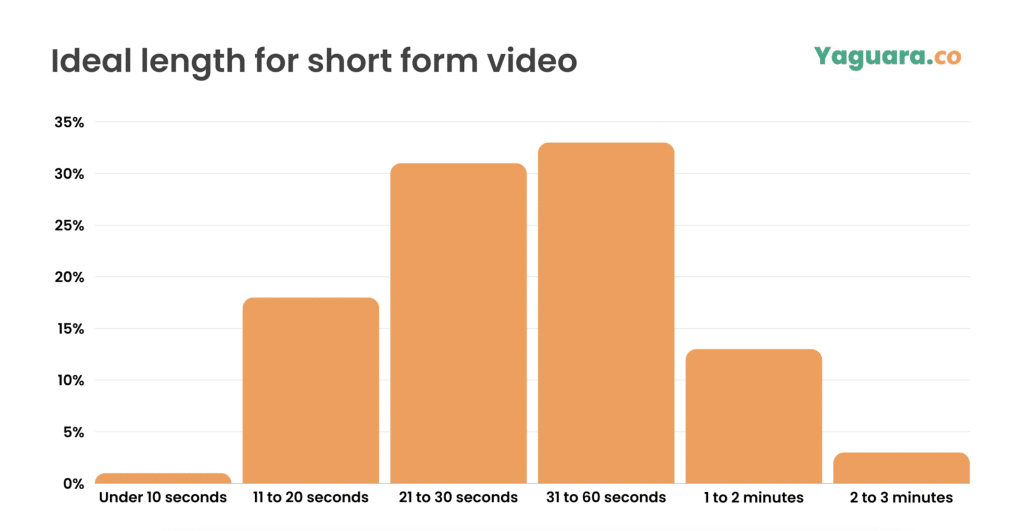
Source: Yagauro.co
That said, 2026 has brought a new level of sophistication to short-form video. Brands can no longer earn virality with dance videos and funny clips: To compete in an overcrowded marketing space, marketers need to grab attention and inspire action.
Some key statistics related to video in 2026 include:
- 63% of consumers state a preference for short-form video when researching a product or service.
- Approximately 91% of marketers are expected to use short-form videos in their strategy in 2026.
- 66% of marketers consider short-form content the most engaging format.
- More than 50% of adults and 75% of Millennials/Gen Z consumers use captions even when not hearing-impaired, and brands that use captions see higher brand recall.
Top strategies for short-form video success include:
- Keep it vertical: Mobile has taken the lead in internet traffic, and that’s even more relevant when it comes to short-form video. To match that behavior, top short-form video platforms recommend a 9:16 aspect ratio.
- Use captions and text overlays: Users aren’t always in an environment where they can listen to content. Captions and text overlays make your videos more accessible to viewers.
- Prioritize strong hooks: In 2026, algorithms favor early engagement, making the first 1 to 3 seconds critical.
- Leverage creator-style formats: Authentic, creator-driven visuals often outperform polished brand ads.
- Incorporate trending sounds and challenges: In 2026, this remains relevant for some organic and creator-led content, but it’s been less central to brand performance than in past years.
- Focus on storytelling: Today’s consumer tends to tune out obvious marketing pitches. Instead of using these platforms to sell your products or services, put the emphasis on storytelling, and sales will follow.
- Test interactive tools: Polls, augmented reality filters, and clickable overlays can be a great way to engage your audience.
- Go live: Live video remains effective for specific use cases like shopping, education, and customer Q&A, but it’s no longer a universal growth tactic.
Performance marketing platforms that focus on results, not reach, are key. You don’t just want to put your content in front of users — you want to inspire action. In 2026, advanced performance platforms increasingly use predictive signals and cross-channel data to help advertisers repurpose top-performing creative and deliver it at moments most likely to convert.
Trend 2: The Rise of Niche Communities and Authentic Engagement
Algorithms have taken over social media feeds, particularly with the rise of artificial intelligence (AI). As a result, consumers have sought out smaller, more niche spaces where they feel seen and valued. Whether they’re on Discord, Reddit forums, or Facebook groups, social media users seek community and authenticity.
- Smaller, niche, human-centric communities are growing in popularity, with groups of less than 100 taking priority.
- Influencers with 1,000-10,000 on platforms like TikTok now average ~10.3% engagement rates, which is significantly higher than many larger accounts.
- About 61% of brands report working with 10 or more influencers.
- 58% of adults report buying products because of influencer recommendations.
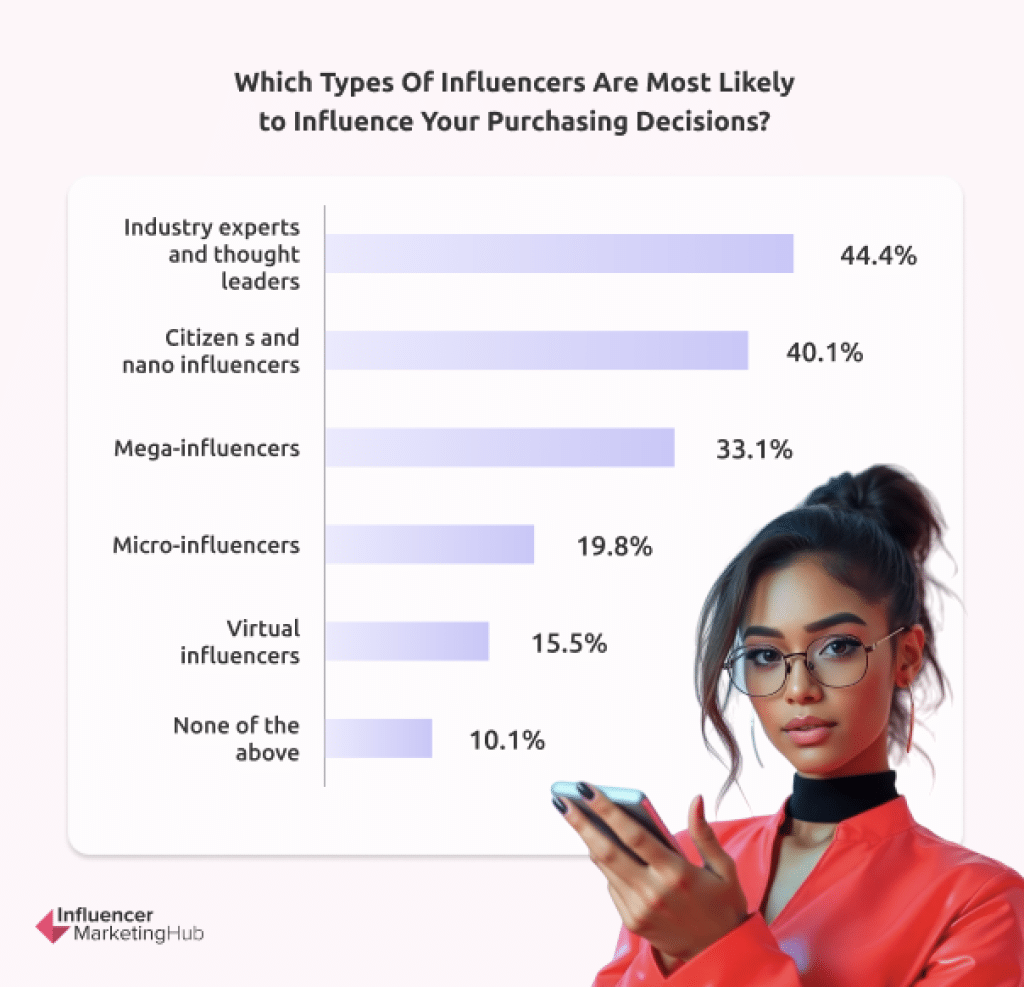
Source: Influencer MarketingHub
For brands, this shift brings more work. It’s no longer sufficient to blast a message to the masses: Instead, marketers have to put time into building and participating in communities. You can reach users with behind-the-scenes videos and posts that elevate users. Even sharing your customers’ posts can show your support for brand loyalists.
Engaging with these communities requires a genuine presence, though: Members can tell if a brand is simply engaging to market to them. Brands should participate in conversations and provide value without selling. In 2026, many brands are also shifting from traditional influencer campaigns to longer-term creator partnerships that emphasize trust, consistency, and shared values.
Trend 3: The Evolution of Social Commerce and Direct-to-Consumer Sales
Social media has moved from networking to shopping. In 2026, social platforms play a central role in discovery and influence, even when final conversions happen elsewhere.
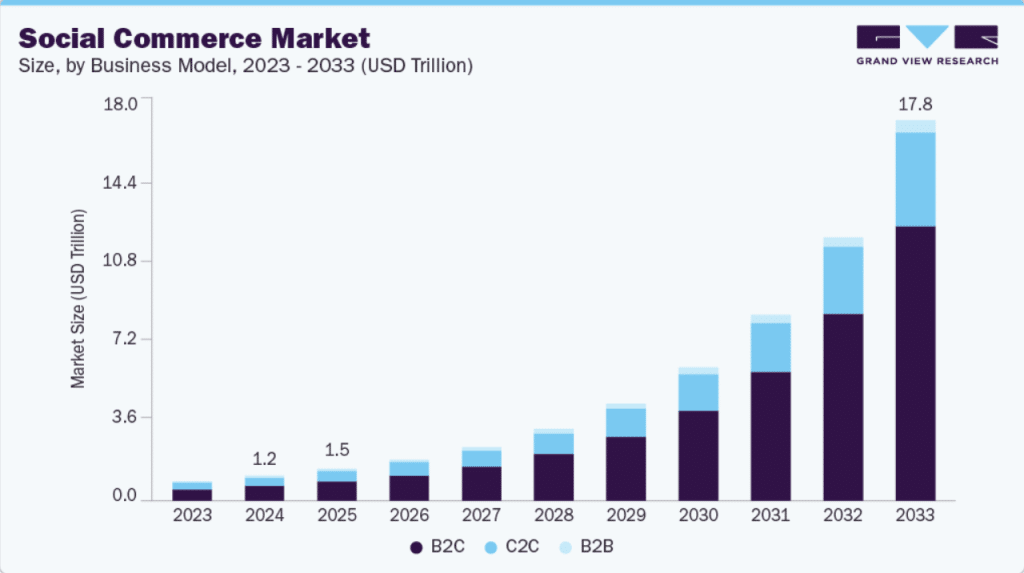
Source: Grandview Research
Previously, in-app purchases, shoppable posts, and seamless checkout purchases meant businesses could grab sales directly on social media sites. In 2026, brands are more selective, using native checkout where it delivers frictionless results, while supporting hybrid journeys that move users to owned e-commerce experiences.
Here are a few notable statistics related to social commerce:
- More than half of Gen Z and millennials have purchased through social media recently, outpacing older cohorts.
- TikTok Shop is expected to exceed $20 billion in global sales in 2026, highlighting rapid social commerce traction.
- China remains one of the strongest markets for social commerce, with conversion rates at about 30%, driven by livestream shopping, influencer marketing, and integrated social shopping experiences.
Take note, though, that as convenient as these integrated shopping features can be, brands still need to build a shop that attracts and engages customers. Live shopping events and real-time product launches can help turn content into conversion points. You can also tap influencers for product/service walkthroughs to grab the interest of top-of-funnel customers.
The challenge is in making every touchpoint shoppable and engaging to boost the chance of a conversion. In 2026, data-driven timing and content sequencing have become just as important as D2C shoppable formats themselves.
In today’s competitive market, timing is everything. Analyzing customer behavior can help you pinpoint peak engagement times and preferred content formats. By gathering this data, you can create content your target customers want to see and post it at the time they’re most likely to engage with it.
Trend 4: Leveraging Data and AI for Personalized Social Media Marketing
Social media is vital in reaching customers, but audience saturation, rising costs, and ad fatigue have led to diminishing returns. In fact, 75% of marketers say their efforts are seeing declining results. This has led marketers to seek out better ways to grab attention using data and the latest AI-powered technology.
In 2026, personalized marketing is more important than ever. Don’t believe us? Here are some statistics that could change your mind:
- 81% of Gen Z customers and 57% of millennials like personalized ads.
- Nearly 69% of shoppers say personalized product recommendations feel relevant and helpful.
- Almost 50% of consumer data collected by companies is used for personalized or targeted ads.
- 63% of marketers plan to increase their budgets for hyper-personalization in 2026.
Here are some ways you can stand out in an increasingly competitive market:
- Audience segmentation: Privacy concerns have made it tougher for marketers to target audiences by personal details like gender and past browsing habits. AI-driven platforms now focus on behavioral signals, intent, and predictive modeling rather than demographics.
- Creative variation testing: Creatives can make a big difference in your ad’s performance. Today’s tools let you try different text and visuals, then monitor results to identify the ads that convert best.
- Automated bidding strategies: The paid advertising space is more competitive than ever, making it tough for marketers to stay on top of their bids. Tools that continuously optimize spend can help advertisers gain an advantage on the most popular social media platforms.
- Conversational AI: AI-powered messaging and moderation tools allow brands to maintain engagement and support communities at scale, without sacrificing responsiveness.
Traditional social media marketers are also finding value in expanding into digital channels outside of social media. PortAventura World, for example — a tourist resort in Spain — achieved a 44% increase in return on ad spend (ROAS) by placing ads across top publisher sites. By combining your social media efforts with other advertising efforts, you can create an omnichannel marketing strategy that works well into the future.
Trend 5: Navigating Platform Changes and Emerging Social Media Trends
The only constant in social media is that it will change. For the past few years, social media has been on a trajectory toward more privacy and niche user spaces, so the best thing brands can do is get ahead of future shifts, and that requires agility and a willingness to experiment.
Some current shifts I’m seeing in 2026 include:
- Instagram’s focus on AI-suggested video feeds.
- TikTok’s new specialized rewards program.
- Ephemeral content like Instagram Stories driving engagement.
Emerging platforms BeReal and Lemon8 previously drew Gen Z attention, but growth has since stabilized, underscoring the risk of chasing novelty without a clear performance strategy.
Here are some statistics to keep in mind as we tackle the rest of 2026:
- More than 58% of the world’s population uses social media.
- Globally, the average daily time spent on social media is 2 hours and 21 minutes per user.
- The most popular social media platforms by active monthly users are: Facebook (3.2 billion), YouTube (2.8 billion), Instagram (2.2 billion), TikTok (1.7 billion), and LinkedIn (1 billion).
Staying updated on platform changes and user behavior trends is more crucial than ever. You can do this by regularly reviewing industry reports while also keeping an eye on platform analytics. This will allow you to adjust your strategies proactively, helping you stay ahead of the curve.
Key Takeaways
When it comes to social media marketing, short-form video and visual content dominate in 2026. It’s also crucial for brands to build community, but authenticity is essential. If brands can find audiences in smaller, more niche communities, they may have an easier time reaching consumers. But, constant platform changes require brands to be flexible. Staying on top of industry shifts and your own analytics can help you future-proof your marketing campaigns.
Frequently Asked Questions (FAQs)
What are the most effective social media platforms for advertising in 2026?
The most effective platforms are those that help you meet your goals and reach your intended audience. For visual content, TikTok, Instagram, and YouTube dominate, while Pinterest and Facebook rule when it comes to social commerce. Demographics are also a consideration. Facebook still skews older, while TikTok and YouTube remain great ways to reach Generation Z.
How can brands measure the ROI of their social media marketing efforts?
To measure ROI (return on investment), look beyond likes and follows. Metrics like return on ad spend, cost per acquisition, click-through rates (CTRs), and conversion rates offer better insights into how your ads are paying off. The right performance platform will offer this information at a glance, along with AI-powered insights that can pinpoint areas where you can boost ROI.
What are some common mistakes to avoid in social media marketing?
Failing to pivot remains one of the biggest mistakes a brand can make in 2026. It’s also important to spread your efforts across multiple platforms rather than relying on one, particularly if you’ve focused on the same platform for years. Neglecting to engage with your audience and ignoring user feedback can sabotage your social media campaigns.
How is the metaverse and Web3 impacting social media strategies?
Interest in the metaverse and Web3 has cooled, but some brands continue experimenting. In 2026, practical AI-driven personalization and performance optimization have taken precedence over speculative virtual experiences.
What are the key metrics for measuring success in social media marketing?
In this area, 2026 isn’t all that different from previous years. CTRs, conversion rates, and customer lifetime value are all essential metrics. You can also keep an eye on engagement rates, including likes, shares and comments, to get a feel for audience sentiment.


