
- Trend 1: AI Evolves from Accessory to Infrastructure
- Trend 2: Hyper-Personalization is the New Baseline
- Trend 3: The Rise of Value-First, Content-Led Growth
- Trend 4: Community as the Primary Growth Engine
- Trend 5: The Shift from Reporting to Prediction
- Trend 6: Vertical SaaS
- Trend 7: Trust, Privacy, and Security as Marketing Assets
- Trend 8: Ecosystem-Led Growth (ELG) is the New Moat
- Key Takeaways
- Frequently Asked Questions (FAQs)
The average business uses 305+ SaaS applications (software as a service, or subscription-based software). Small or medium-sized businesses (SMBs) probably use fewer — maybe 30 to 50 — but even that number can feel unmanageable. Too many tools can lead to technical debt: outdated software, siloed data, and frustrated employees struggling with systems that don’t (or can’t) talk to each other.
SaaS was built on a simple premise: to make software easier to manage. For the most part, it’s over-delivered. Not long ago, upgrading a word processing program or contact database created a logistical nightmare. It required sneakernet IT — tired specialists literally walking from desk to desk to manually install new versions on every individual machine. If that software was buggy, the fix was just as painful. You waited weeks for a physical disc to arrive by mail before IT began its cycle of manual installs again.
The cloud revolution of the 2000s was only the beginning, and today, the landscape has shifted again. Now, we don’t wait for updates: CI/CD (continuous integration/continuous deployment) and evergreen management facilitate daily background software updates with zero downtime. Modern SaaS is becoming agentic, so instead of you learning the software, the software uses AI agents to understand your goals and execute tasks on your behalf. Deployment strategies like canary releases mean that 1% of new users test new features first. If errors appear, the system automatically rolls back before the other 99% see it.
2026 SaaS is (at its best) bug-free and predictive. AIOps (artificial intelligence for IT operations) can identify and patch vulnerabilities or performance lags before a human user even notices a problem.
With all that said, then, what are the top SaaS trends for 2026? I’ve laid out the eight you should know below.
Trend 1: AI Evolves from Accessory to Infrastructure
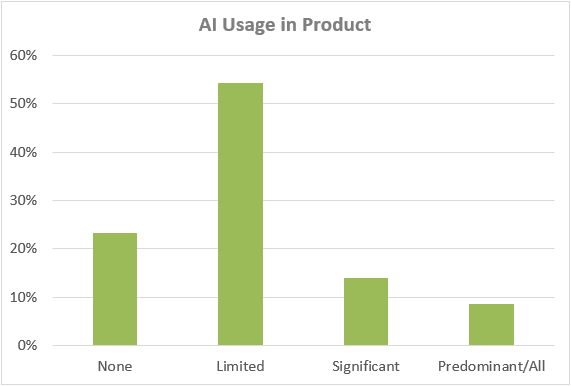
In 2025, AI was the shiny new toy of the SaaS world: experimental, exciting, and somewhat chaotic. The novelty has evaporated in 2026, leaving behind something even better: invisible infrastructure. AI isn’t a feature you choose to use. Now, it’s the engine powering each stage of the B2B journey, from initial keyword research to lifecycle retention. According to a SaaS Capital survey on AI adoption among SaaS companies:
- 76% use AI in their products.
- 69% have deployed AI solutions in daily operations.
- 88% using AI in daily operations also use it in their product.
- 92% planned to increase AI use in 2025 (and likely beyond).
[Source: SaaS Capital]
The Rise of the Agentic Workflow
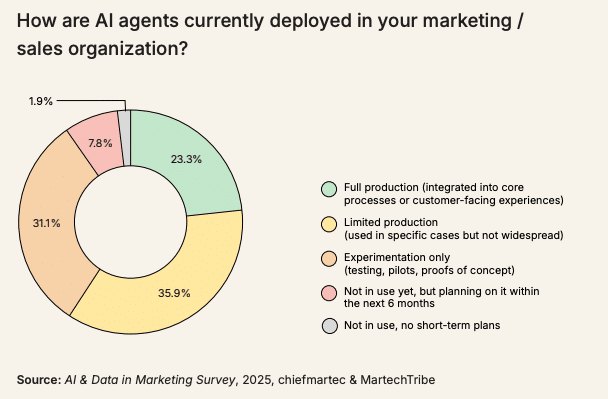
The most significant shift this year is the transition from generative AI (which writes) to agentic AI (which acts). Advanced SaaS teams are now deploying autonomous agents that suggest content and manage entire workflows. These agents can handle onboarding sequences, lead scoring, and partner activation with minimal human oversight.
Why it Matters for SaaS Marketing
This shift creates a massive competitive advantage. Lean marketing teams can scale their operations without a corresponding jump in headcount. The value proposition for customers changes, too. Your software is more than a simple tool; it’s an intelligent partner actively working on their behalf.
Precision Over Speed: The New Content Standard
Early adopters used AI for speed, often resulting in a sea of generic, surface-level content. Today’s winners are using AI for precision.
- Content scoring: AI models can predict which assets will resonate with specific buyer personas before they’re published.
- Predictive analytics: AI interprets natural language processing (NLP) queries to make platforms more intuitive and accessible, turning static databases into conversational partners.
- Data-driven authenticity: The challenge marketers face isn’t whether to use AI, but how to balance automation with human thought leadership. The most successful brands use AI to handle the drudge work of SEO and formatting, freeing human creators to focus on original insights and brand voice.
[Source: Martech for 2026]
Practical Takeaways
To stay ahead, B2B marketers must move beyond basic chatbots and integrate AI into the core of their strategy.
- Deploy vertical-specific agents: General AI is out; niche AI is in. Choose agents tailored to your specific industry (e.g., fintech or healthcare) to ensure the insights you provide are relevant to your unique buyer intent.
- Focus on retention metrics: Use AI to identify at-risk users during onboarding. By predicting churn before it happens and triggering automated, personalized interventions, brands are seeing up to a 5x reduction in acquisition costs.
- Human-in-the-loop strategy: Build a workflow where AI handles the data and original drafts, but human editors provide the final authenticity (and accuracy) check to help your brand stand out in an AI-saturated market.
Trend 2: Hyper-Personalization is the New Baseline
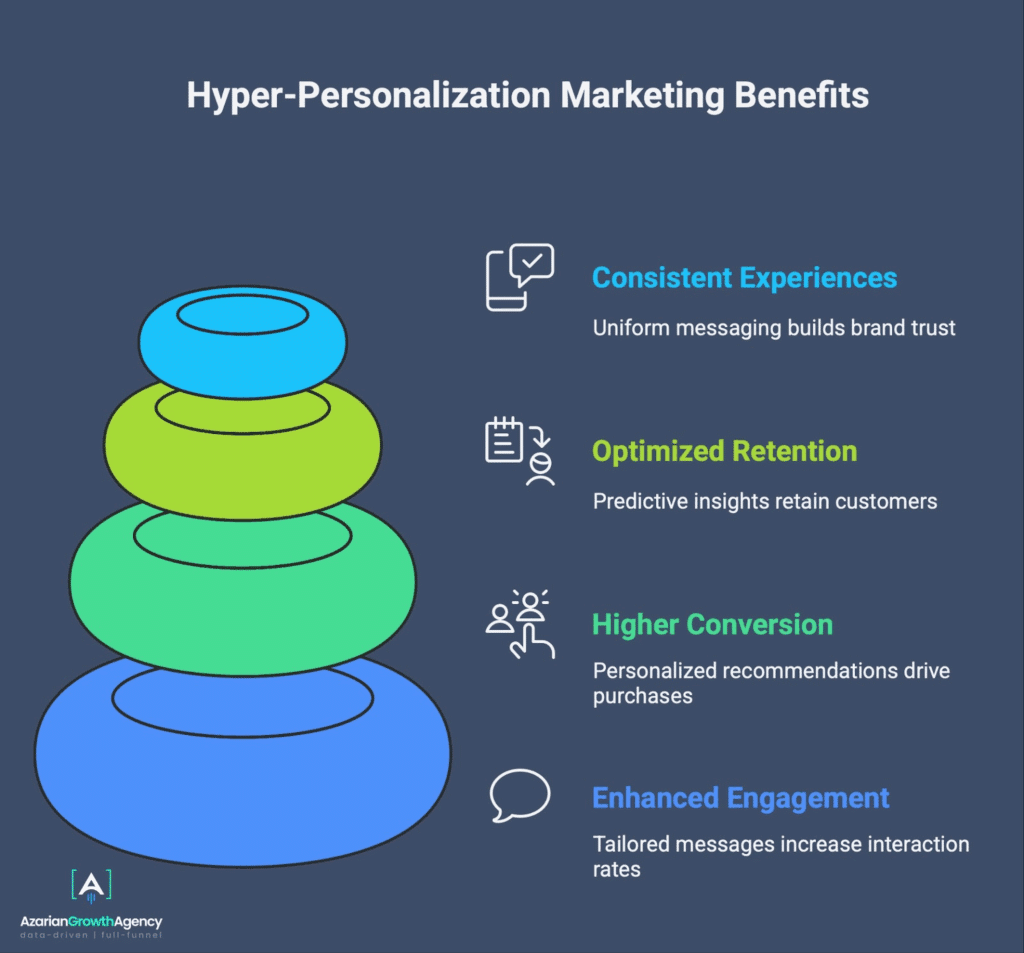
Persona-based marketing has gone the way of the dinosaur. SaaS buyers rarely respond to broad categories like “marketing manager in mid-market tech.” Instead, they expect an experience that adapts in real-time to their specific intent, product usage, and current adoption stage. Generic outreach has become invisible. Research shows that personalized CTAs and tailored experiences now convert 202% better than generic ones. The moral of this story? Hyperpersonalization is a mission-critical feature.
The Move to Predictive Experience Design
Forget the {First_Name} era. Today’s hyper-personalization is predictive: your software and marketing anticipate what users need before they request it. How? By real-time data orchestration that analyzes:
- Behavioral signals: If a prospect views your enterprise pricing page five times, your website automatically swaps out “Getting Started” guides for “Enterprise Security & Compliance” case studies.
- LLM-driven intent: AI agents analyze the why behind a search. Someone looking for retention frameworks receives different nurture content than someone searching for automated onboarding tools, even if they share the same job title.
- Contextual awareness: Messaging adapts to external signals, like recent company news, industry-specific market shifts, or even a user’s local time and device.
(Source: Azarian Growth Agency)
Account-Level Orchestration (ABO)
For B2B SaaS, an individual is rarely the only decision-maker. Personalization has scaled to the account level this year. AI systems coordinate consistent messaging across the entire buying committee (typically 6-13 stakeholders).
If the CTO is concerned about security and the CFO is focused on ROI, your AI-native platform ensures that each stakeholder sees a personalized version of the same value proposition delivered via their preferred channels (e.g., a LinkedIn ad, email, or in-product notification).
Why it Matters for SaaS Marketing
By shifting to signal-responsive journeys, brands are seeing a 70% boost in conversion rates within the first year. This precision reduces marketing waste by only directing ad spend to accounts showing high-intent research behavior.
Practical Takeaways
Hyperpersonalization is only as good as the data feeding it. Audit your data infrastructure:
- Consolidate first-party data: Break down silos between your CRM, marketing automation, and product usage data to create a single source of truth.
- Implement adaptive web layers: Use tools that allow for dynamic landing pages. Visitors from different industries shouldn’t see the same hero image or headline.
- Prioritize next best action logic: Use AI to suggest the most logical next step for each user — perhaps a specific feature tutorial for a new user or an upsell offer for a power user — which will boost retention and lifetime value (LTV).
Trend 3: The Rise of Value-First, Content-Led Growth
In the pre-cloud world, software was a one-off purchase: You bought the disc, used the code, and that was that. Today, SaaS requires an ongoing commitment, and the free trial isn’t enough to win over a cautious market. Today’s most successful brands have moved away from polished, sales-heavy campaigns toward value-led content.
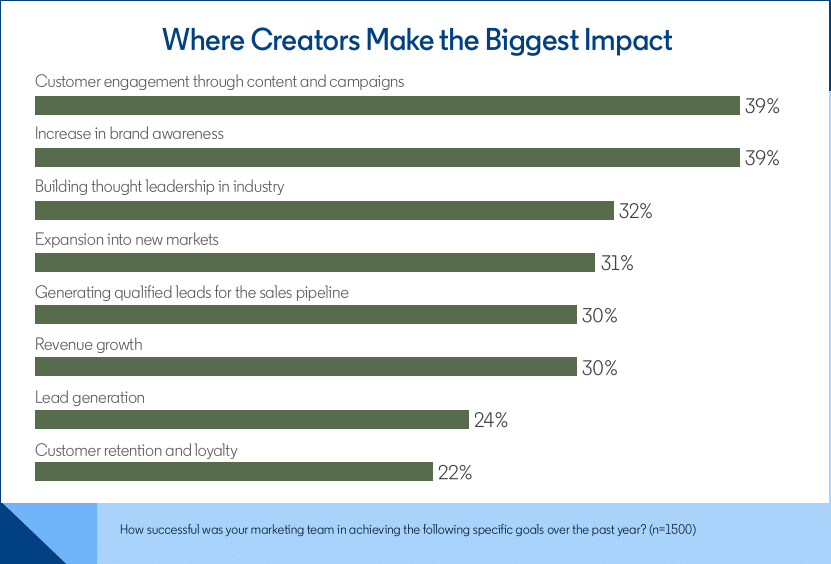
Buyers expect tangible proof of value before they consider a subscription. Enter the hidden buyer: non-primary users in finance, legal, and operations who hold significant veto power over B2B deals. To reach them, marketing must prioritize credibility and educational depth over razzle-dazzle. According to the 2025 LinkedIn B2B Marketing Benchmark, 94% of marketers agree that trust is the primary currency for B2B success.
(Source: 2025 LinkedIn B2B Marketing Benchmark)
Educational Content
Buyers are bypassing product pages and flocking to authoritative guides that solve actual problems. Whether it’s “How to scale a remote DevOps team” or “Managing HIPAA compliance in 2026,” educational SEO is a magnet for intent-rich traffic. Savvy teams use AI to repurpose one long-form guide into a LinkedIn carousel, a 30-second TikTok explainer, and a series of newsletter deep-dives.
Thought Leadership
Thought leadership isn’t a C-suite ego play, it’s become a cost-effective acquisition tool. The 2025 Edelman-LinkedIn Thought Leadership Impact Report found that 81% of buyers say that high-quality thought leadership helps them recognize previously overlooked business opportunities. Data from FirstPageSage shows that thought leadership SEO has one of the lowest customer acquisition costs (CACs) in the industry, averaging $647 for B2B SaaS, compared to the $982 average for LinkedIn ads.
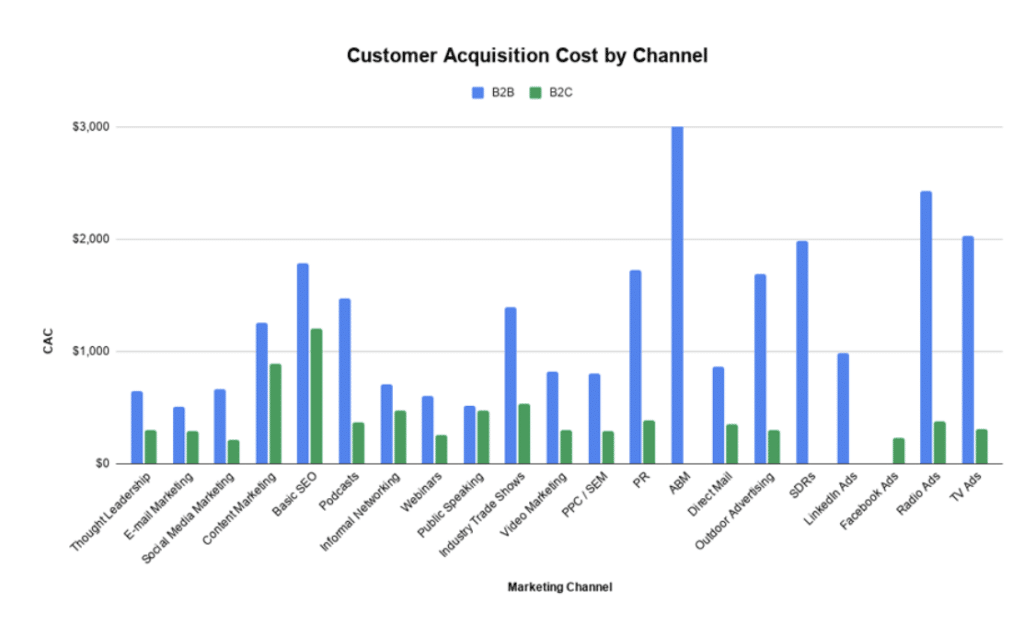
(Source: FirstPageSage)
Actionable Steps
To close complex deals in 2026, arm your internal champions with content that helps them sell for you.
- Stop selling, start solving: 95% of hidden buyers say thought leadership is more effective than sales materials at demonstrating a vendor’s potential.
- Visual overload: People remember 65% of visual content vs. only 10% of text. Use bite-sized explainer videos and infographics to simplify complex technical concepts for non-technical stakeholders.
- Prioritize human credibility: 75% of B2B marketers have increased budgets for partnering with influencers (like industry creators and subject-matter experts) to humanize their brand and bypass the AI-generated noise.
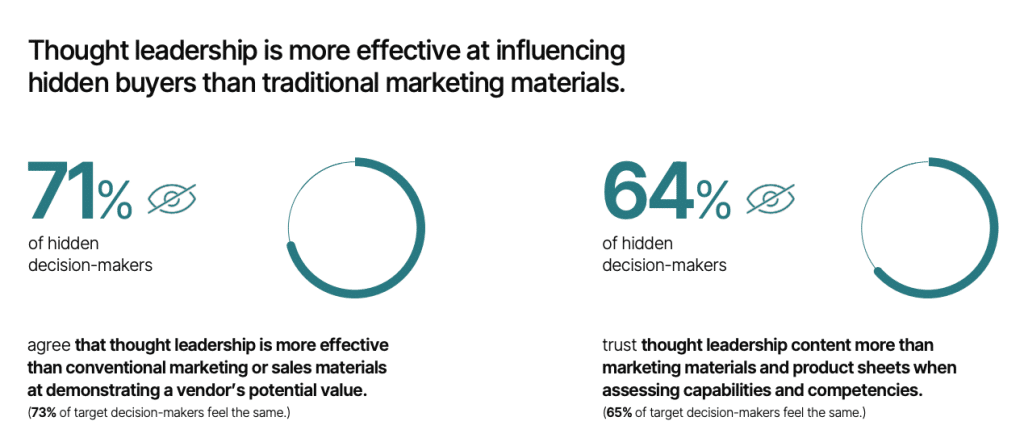
(Source: 2025 Edleman-LinkedIn B2B Thought Leadership Impact Report)
Trend 4: Community as the Primary Growth Engine
In 2026, the era of one-way, polished brand broadcasting has ended. As AI-generated noise saturates every digital channel, buyers have developed a “filter” for traditional marketing. Instead, they’re turning to peers. Over 90% read online reviews, and 73% only trust recent reviews (those within the past month). Thus, SaaS marketing is continuing its transition from a support-led model to a community-led growth (CLG) strategy.
According to Travis O’Leary, director of digital transformation at Candescent, “The institutions that win over the next decade will not be the ones with the most locations, but the ones with the most intelligent, adaptable, and customer-centric digital foundations.”
The Rise of Micro-Communities
Successful SaaS companies no longer view Slack groups, Discord servers, or niche LinkedIn collectives as “extra” support channels. Instead, these communities have become retention and referral powerhouses. These micro-communities offer space for customers to solve problems in real-time, share industry hacks, and celebrate wins.
Why it Matters for SaaS Marketing
By shifting the focus from user to member, brands create a sense of ownership. Digital advertisers can amplify this change by:
- Directing high-intent leads into these private communities, rather than just to a landing page.
- Repurposing the most helpful user-generated content (UGC) into performance ad campaigns.
- Using community engagement data to identify at-risk users before they churn.
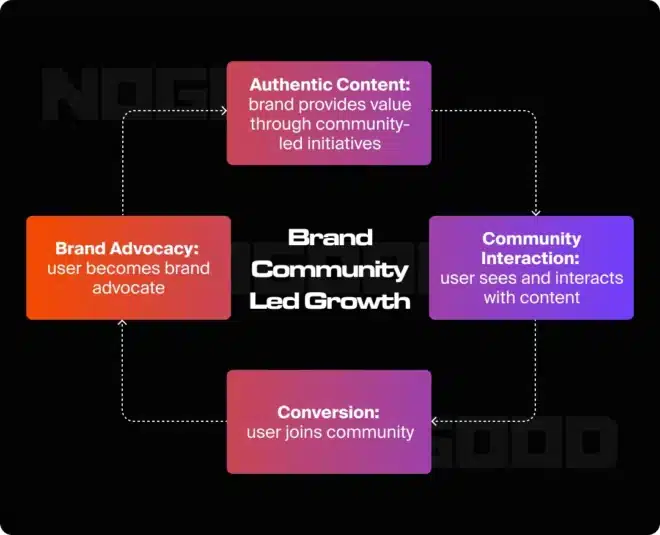
(Source: BuddyBoss)
Activating Your Unpaid Sales Force
Happy customers make the best sales reps. Social proof has evolved beyond the static, generic testimonial: Today’s buyers expect unfiltered advocacy, like transparent metrics, data-backed success stories, and open-product roadmaps.
Marketing teams are using long-term behavioral data to identify power users (those whose loyalty and activity suggest they’re ready to influence others). By activating these advocates through incentivized reviews, customer-led webinars, and expert Q&As, brands can create programmatic campaigns that feel authentic rather than promotional.
Practical Takeaways
Authenticity is the ultimate differentiator in an AI-saturated market. To build a credible community today:
- Grant exclusive access: Invite your top 5% into a private beta group or customer advisory board.
- Amplify user voices: Don’t just collect testimonials; give your advocates a platform. Let them lead your next training session or co-author your next industry report.
- Embed social proof everywhere: Move your customer stories out of a case studies tab and embed them directly into the product experience and sales journey.
Trend 5: The Shift from Reporting to Prediction
Marketing without analytics is like flying blind — a financial risk SaaS can’t afford. With acquisition costs rising and competition intensifying, gut-feeling strategies are a bad idea. Success requires moving beyond traditional reporting (what happened) toward prescriptive analytics (what we should do next). According to László Attila, founder of Pixel & Prompt, “The marketers who master prediction today will own performance tomorrow.”
The metrics that matter in 2026:
- Net revenue retention (NRR): High-growth companies are hitting 120% to 130% NRR, proving they can grow through expansion without constantly hunting for new brands.
- Customer acquisition cost (CAC) payback period: In a capital-efficient market, the goal is to recoup acquisition costs within 12 months.
- Burn multiple: This metric measures how much you’re spending to generate each dollar of ARR. A multiple below 2.0 is the gold standard for sustainable growth.
- Activation and intent signals: Tracking “Aha!” moments and high-intent behaviors (like visiting a pricing page three times) to trigger human sales intervention at the right moment.
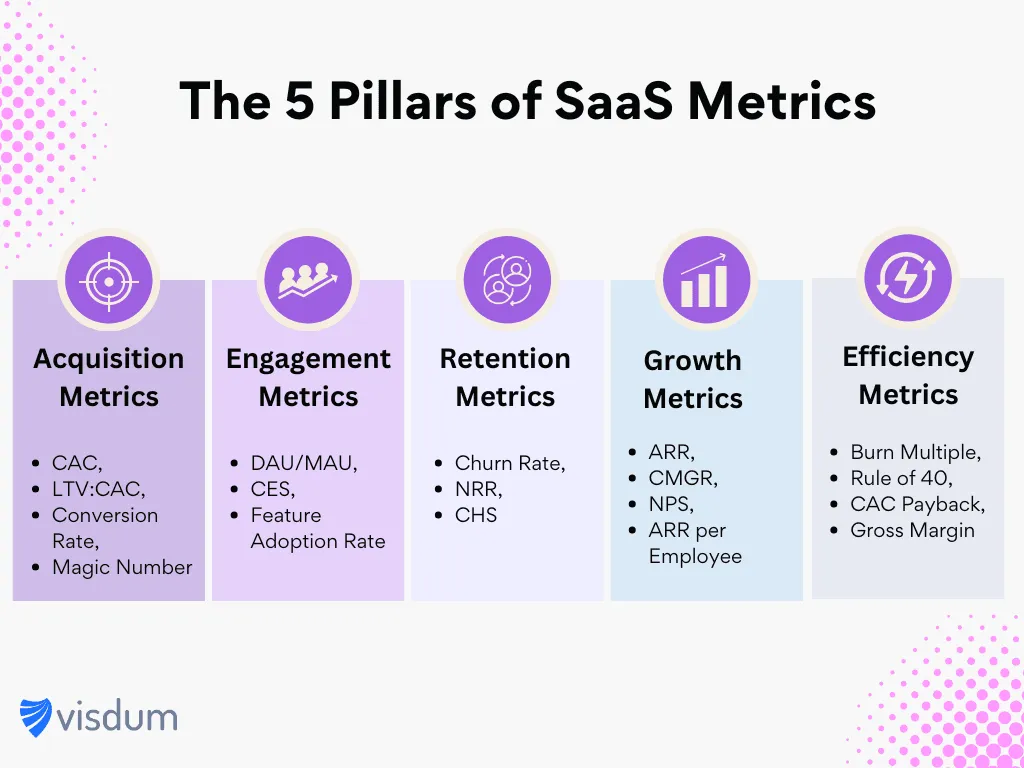
(Source: Visdum)
The AI Advantage
While still a useful tool for crunching numbers, AI has become an active part of the marketing team. According to recent B2B benchmarks, AI-related skills are the fastest-growing digital requirement for marketers, as teams move from exploratory use to advanced execution.
How it’s changing the game:
- Prescriptive insights: AI flags at-risk accounts for churn before they leave and recommends specific retargeting schedules based on historical success patterns.
- Automated experimentation: Instead of quarterly campaigns, AI allows teams to run thousands of micro-tests in real-time, optimizing ad bids, creative assets, and email timing autonomously.
- First-party data mastery: As third-party cookies vanish, your internal data (usage patterns, support chats, and CRM history) is your most valuable asset. AI analyzes these vast datasets to surface audience segments that humans could easily miss.
Action Steps
Close the capability chasm. The gap between teams using AI-driven analytics and those stuck in manual reporting is becoming exponential. To bridge it:
- Shift to always-on optimization: Transition away from static reports. Implement dashboards that provide real-time visibility into your qualified pipeline and win rates.
- Instrument intent signals: Connect your ad platforms to your CRM intent data. When an account shows research behavior, your budget should shift automatically to prioritize them.
- Invest in data literacy: The primary barrier to AI success is the skills gap. Train your team to move toward — and embrace — strategic system orchestration.
Trend 6: Vertical SaaS
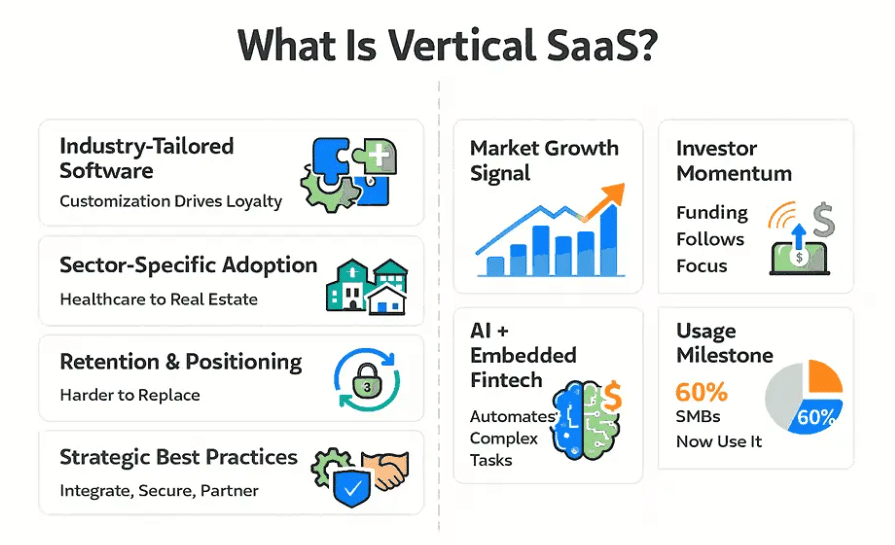
Previously, the SaaS story included horizontal giants like Slack or Salesforce — platforms designed for everyone, regardless of industry. While these tools remain important, 2026 marks a decisive shift. Vertical SaaS, software surgically designed for the nuances of a specific niche, is outpacing generalist platforms.
Tailored Architecture vs. One-Size-Fits-All
Unlike horizontal solutions requiring heavy customization or awkward workarounds, vertical SaaS can speak the “native” language of its sector. Whether healthcare, construction, or legal services, these platforms arrive tailored to the workflows, regulatory requirements (like HIPAA or SOC 2), data structures, and customer expectations of a specific need — be that performance marketing, personnel management, or workplace benefits administration. That specialization means companies need less customization out of the box, and users typically see faster onboarding, better adoption, and more actionable insights.
(Source: Oubit)
Why the Shift?
Businesses are realizing that generic tools, while flexible, often lead to feature sprawl and implementation fatigue. In contrast, Vertical platforms deliver a better fit with less effort. A construction firm may choose a system that manages tasks and integrates supply chain logistics, on-site reporting, and project timelines. A healthcare clinic needs a platform that bakes HIPAA compliance and patient record management into the code, rather than adding it as a third-party plug-in. In marketing, the latest vertical tools deliver industry-specific KPIs like creative fatigue and audience-specific conversion trends that generalist analytics often miss.
The Power Players: Vendors as Acquirers
The narrative of big tech swallowing small niche players has flipped. In 2026, vertical SaaS vendors are the primary acquirers. They’re not necessarily expanding into new industries because they’re digging deeper into their own.
Investors have reset their expectations, prioritizing mission-critical ownership. Instead of a construction SaaS company trying to sell to lawyers, it’s buying niche tools for adjacent problems within construction (think: compliance training or workforce planning) to create a unified, end-to-end industry suite. Strategic shifts driving this trend include moving from a single tool to a unified platform to manage the entire business cycle. By owning every mission-critical workflow, vertical vendors make switching costs so high that they effectively dominate their niche.
Practical Takeaways
For B2B marketers in the vertical space, the goal for 2026 is dominance through depth.
- Market the ecosystem: Shift your messaging from what the tool does to how it manages the entire industry workflow.
- Highlight regulatory ease: For sectors like finance or legal, lean heavily into how your platform automates compliance, a major pain point that horizontal tools often miss.
- Prioritize M&A messaging: If your company is acquiring niche tools, focus your marketing on the unified experience to show customers they don’t need to stitch together a dozen different apps.
As one Reddit commenter noted, “It seems to me that the real issue should be, ‘What’s the use case, and does it really create value for the user?’ Whether horizontal or vertical, customer adoption will depend on how useful it is in creating value. It might be productivity enhancement, higher customer retention, or revenue growth.”
Trend 7: Trust, Privacy, and Security as Marketing Assets
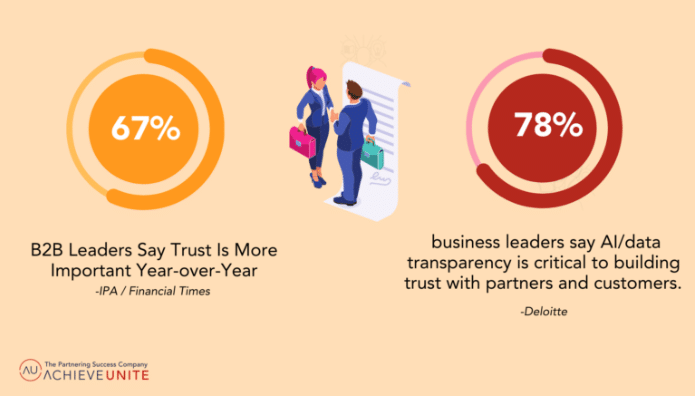
Security and privacy have moved beyond IT checkboxes and legal hurdles to become the primary differentiators for closing B2B deals. As enterprise buyers become more risk-averse, trust has evolved into a tangible marketing asset. It shortens sales cycles and justifies premium pricing. Brands transparent about their data stewardship win; those treating it as an afterthought are increasingly excluded from consideration.
The Rise of Privacy-First Personalization
The uncertain future of the third-party cookie has forced everyone to embrace zero-party data (data users voluntarily share) and privacy-first personalization. Customers are willing to exchange their information, but only when the value is clear, and they maintain control.
Why it Matters for SaaS Marketing
Transparency has become a core part of the product story. About 73% of organizations say the most difficult aspect of managing security is getting visibility into security risks in business-critical SaaS apps.
Leaders don’t bury privacy policies anymore — now they highlight security as a frontline feature. Over 70% of consumers report trusting AI less than they did a year ago. Winning brands combat this reticence by publishing explainability docs showing exactly how their AI makes decisions and which datasets the company used for training. Another powerful counter-narrative in an era of mass data hoarding? Marketing your data minimization policy and collecting only what you need.
(Source: Achieve Unite)
Security Accelerates Sales
For B2B SaaS, security certifications (SOC 2, ISO 27001, HIPAA) appear on the landing page. Marketing your security posture in 2026 is as important as marketing your UI. Other emerging trust signals this year include:
- Real-time threat visibility: Some SaaS platforms now offer customers a live security dashboard that displays anomaly detection and encryption status.
- The ESG and sustainability link: Today’s savvy buyers track AI spend management and the environmental impact of data processing. Sustainability is shifting from a moral claim to an operational metric, with founders tracking ESG factors to ensure long-term viability in regulated markets.
- Consent-driven workflows: Instead of aggressive gated content, brands use progressive profiling. They gather data gradually through helpful interactions that build relationships, rather than create database entries.
Action Step
Don’t wait for the security audit to discuss trust — make it a central pillar of your 2026 story.
- Market your certifications: Treat a new SOC 2 TYPE II or GDPR update as a major project launch. Create a trust center where prospects can easily find, verify, and share these documents with their legal teams.
- Be open about AI limitations: In your product demos, clarify where it uses AI and where humans stay in the loop. Explainability is an effective way to convert AI from a mysterious black box into a strategic partner.
- Audit your small signals: Inconsistent email signatures, broken links, or non-secure URLs erode trust faster than a slick ad can build it. Standardize every touchpoint to reflect a security-first (and detail-oriented) culture.
Trend 8: Ecosystem-Led Growth (ELG) is the New Moat
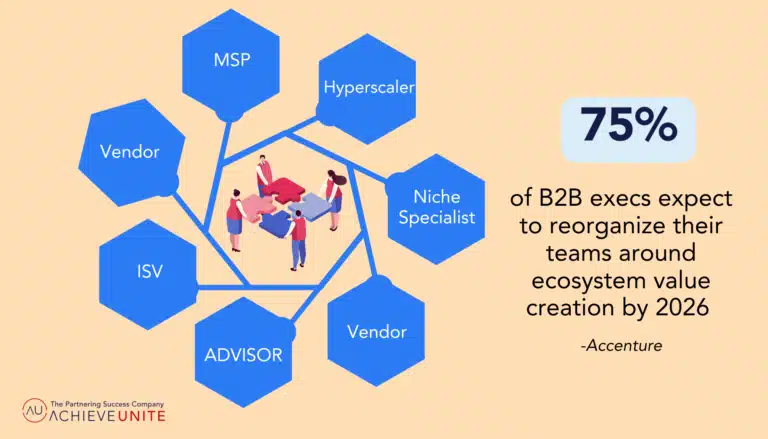
The cost of direct customer acquisition has become prohibitively high for many. As traditional paid channels saturate and outreach response rates plummet, SaaS leaders are pivoting from solo sales to ELG. Instead of a linear sales motion, ELG leverages a network of technology partners, agencies, and consultants to drive high-intent leads at a significantly lower CAC.
Mike Nevin, managing director at Alliance Best Practice Ltd., says that, “There is no doubt in my mind that ELG should be at the forefront of every SaaS CEO looking to grow his or her company.”
Moving to Multi-Partner Clusters
The isolated partnership manager no longer exists. Today’s deals are rarely won by a single company, they’re shaped by clusters of partners — an independent software vendor (ISV) plus a system integrator (SI) and a consultant — who collaborate to solve a complex business outcome.
Why it Matters for SaaS Marketing
A strong partner ecosystem offers a sales channel and a defensible moat. Competitors can copy your features, but they can’t easily replicate a web of 50+ deep technical integrations and a bunch of loyal consultants who recommend your tool daily.
Leads sourced through partner introductions close 50% faster and have higher win rates because they inherit the trust the partner has already earned. Marketing teams have begun optimizing for “alternative to [competitor] + [integration]” searches, capturing users specifically looking for tools that play nicely with their existing tech stack.
(Source: Achieve Unite)
Strategic Partner Selection
More isn’t better: Your playbook should focus on high-engagement tiers. Successful brands are reallocating resources away from hundreds of passive referral links to a few dozen strategic partners who align with their ICP and business model.
Partnerships have evolved from referral handoffs to unified workflows. Sales teams use platforms like Crossbeam or Reveal to map overlapping accounts in real-time and coordinate co-selling strategies.
Brands are winning partner mindshare by providing tailored support across the entire lifecycle, not just at the point of sale. This assistance includes co-branded demand generation, shared Slack channels for deal support, and joint success planning.
Key Takeaways
In 2026, SaaS marketing has evolved into a high-stakes discipline where trust, precision, and ecosystem depth are the big differentiators. Lead volume isn’t the greatest measure of success; now it’s NRR and the ability to turn security, privacy, and community into tangible growth assets. By shifting from broad horizontal reach to vertical specialization and predictive, intent-based journeys, marketers drive value beyond the initial click. The ultimate winners? Those who recognize and capitalize on the value of their partner networks and customer advocates.
Frequently Asked Questions (FAQs)
What are the most effective digital advertising channels for SaaS in 2026?
Native advertising is out. Performance advertising is in. High-intent channels like Google Search, LinkedIn Ads, and even Reddit dominate because they allow for precise, real-time optimization against revenue outcomes like CAC and NRR. In a privacy-first world, these platforms win by turning behavioral signals and first-party data into predictable, high-performing growth engines.
How can SaaS companies reduce churn through digital marketing?
SaaS companies can reduce churn by using predictive analytics to identify at-risk users and then triggering automated, personalized win-back campaigns or educational content to reinforce the product’s value. Marketing teams can use in-app messaging and SMS to guide users toward their “Aha!” moment and foster long-term stickiness through exclusive, community-led engagement.
What are some successful examples of SaaS digital marketing campaigns?
Brands like Mailchimp transform user interaction data into actionable content to help marketers build better relationships. Canva treats user generated data and design trends as content that’s easily customized, shared, and integrated. Veema (pharma) and Procore (construction) use vertical SaaS to address niche regulatory and operational pain points that horizontal tools can’t touch.
How is AI impacting the SaaS marketing landscape?
In 2026, AI has evolved from a creative assistant into an autonomous, agentic engine that executes workflows like lifecycle sequencing and real-time churn prevention. It analyzes intent signals to deliver hyper-personalized content at scale across the entire buyer journey. Its expanded role allows lean marketing teams to achieve massive leverage, turning SaaS platforms into intelligent partners able to proactively solve customer programs.
What are the key metrics for measuring success in SaaS digital marketing?
This year, the focus has pivoted toward efficiency and durability, prioritizing NRR and the CAC payback period to ensure sustainable growth. Teams are tracking activation rates and product-qualified leads, which provide a more accurate picture of how digital marketing drives actual product adoption. These metrics align marketing spend with long-term profitability, rather than just top-of-funnel volume.


